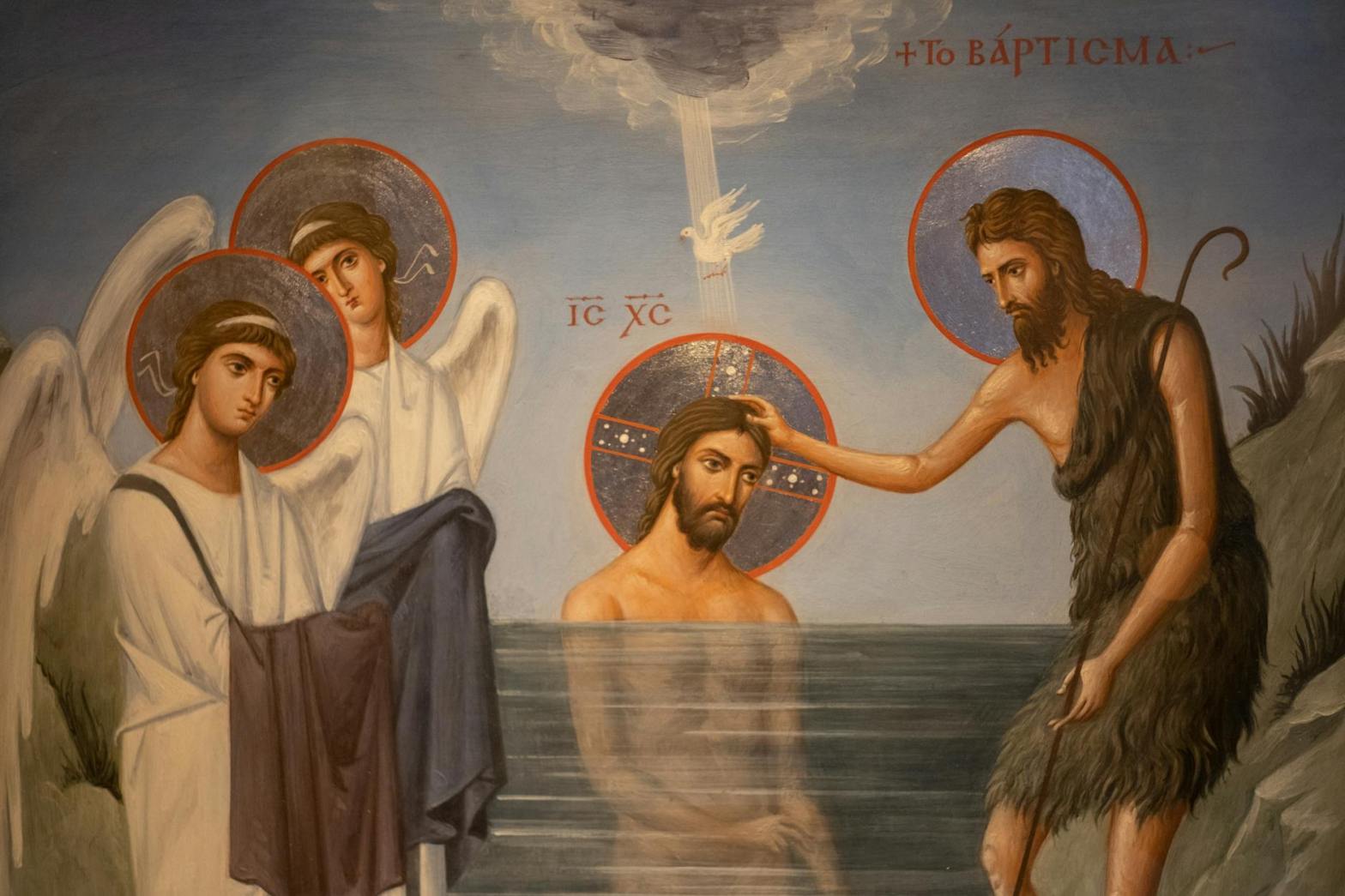
Not the Jesus He Wanted
The Baptism of the Lord; Matthew 3:13-17
When Jesus came to John to be baptized,
the Baptist baulked, suggested roles reversed.
He wanted One whose power was recognized:
refining fire, not Human One immersed,
to surface breathless, shaking with the chill
of river running down a crack in earth.
“Now let it be,” said Jesus. “To fulfil
this rightness is shared sign of Spirit birth.”

Like John, we’d like our Jesus to aspire
to conquer evil, gather up the grain,
disposing of the chaff in judgement’s fire
so good will flourish without need of pain.
God’s Spirit came to Jesus like a dove,
a gentle creature, not a searing flame.
God’s voice assured him of his Father’s love,
well pleased he chose humility, not fame.

So when we want a Lord up in the sky
who reaches down to pull the puppets’ strings,
and sweeps away abusers from on high,
policing Earth with might on angel wings,
remember, Jesus lived to heal and teach;
he chose to share our suffering and death,
prayed desperately when God seemed out of reach,
forgave his enemies with laboured breath.

Now when Earth’s rulers claim God’s on their side
in war, harsh action and the need to win,
the god they worship is their power and pride.
Though propaganda justifies the sin,
their nation’s profit still is selfish gain.
The people who exemplify Christ’s way
do not hit back but face the risk and pain,
and sometimes bring to light a brighter day.
	Barbara Messner 7/01/2026
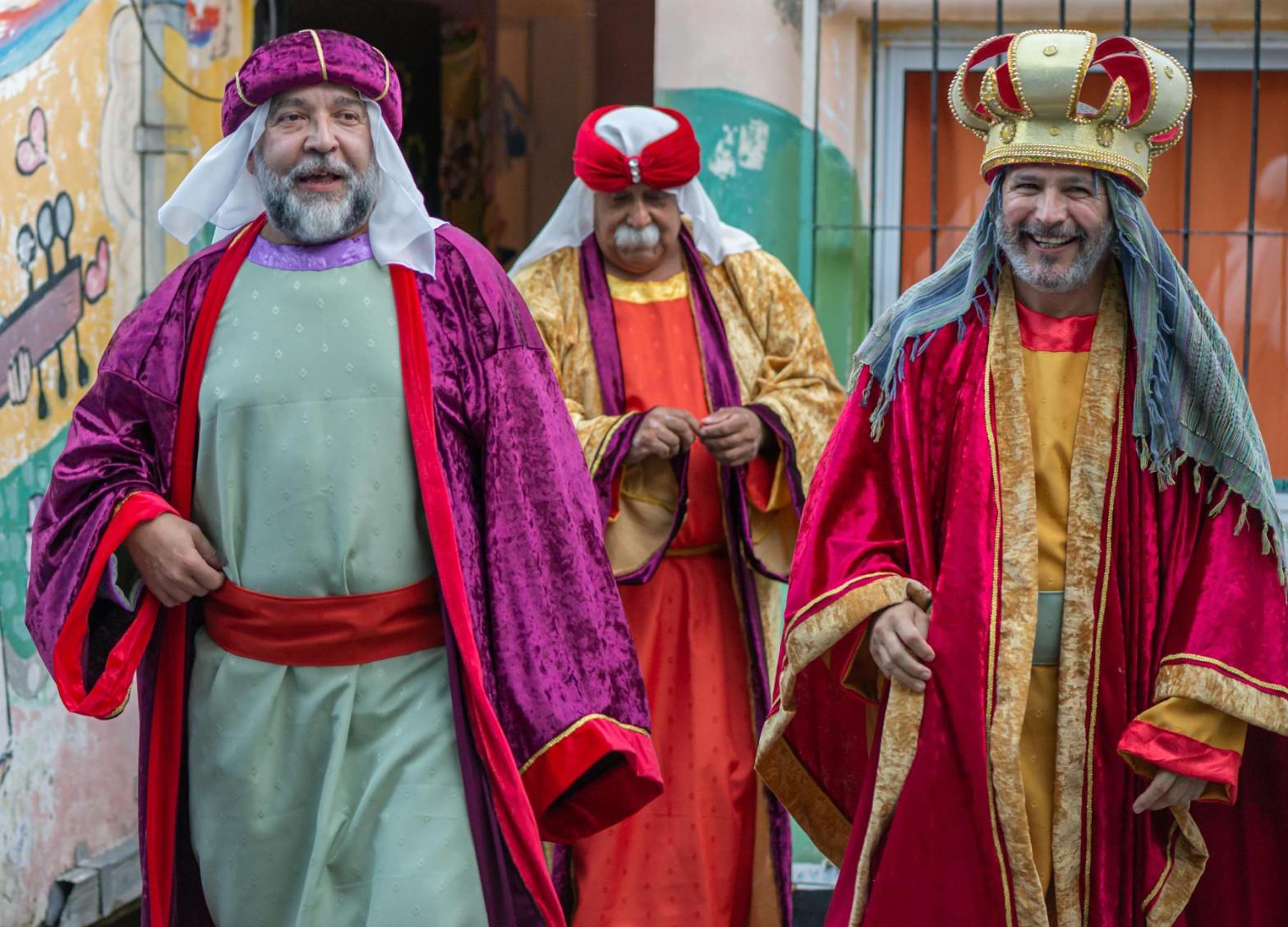
Magi Returning
Magi Returning
Epiphany; Matthew 2:1-12
“Epiphany” means that flash of insight
or moment of joyful awareness
that seems like a precious gift,
to which our response is gratitude
maybe followed by exploration,
or even difficult commitment
if we live into what’s revealed.

Where did epiphany take the magi
who had already travelled far
in search of a significant child
whose existence would verify
their scholarly interpretation
of prophecies, dreams and stars.

Exploring where wisdom leads
requires a journey, but swift insight
may change the destination and arrival
may surprise by transforming
all reasonable hypotheses.

Did the wise ones painfully discover
that encounter with the divine
is not to be found or safely shared
in ornate palaces of power?
Where did that leave them,
if indeed they were kings
who would journey back
by another road
to the countries left behind?

Did they regret the treasures
suited to a royal child
but given to a poor family
about to become refugees?
Or were they glad at least
to offer some recompense
because they were at fault
straying from star path to palace
and revealing their mission
to a jealous and murderous king?

Modern mercenary minds resist
receiving or responding to epiphanies,
or recognizing the wisdom of the wise.
Now few would set out
guided by prophecies, dreams and stars,
while many are easily distracted
by the lure of power and wealth
and lose track of their star path
once so bravely chosen.
As for poor children and refugees,
there are few gifts to sustain them
and few countries to harbour them.
Jesus was fortunate in that respect.

What did these foreign travelers see
when they knelt before this child?
Were they enchanted by a limpid gaze,
a hint of future wisdom beyond theirs?
How could they learn from such a child,
as yet too young to teach in words?
How could they follow his way of life
when they returned to far off lands?

In Eliot’s Journey of the Magi, they returned
“no longer at ease here, in the old dispensation,
with an alien people clutching their gods”,
but what if insight opened inner eyes,
liberating their view of God,
and their perception of humanity,
so they judged no-one alien, all akin?
Would they not change how wisdom ruled,
more just, more humble and more kind?
	Barbara Messner 30/12/2025
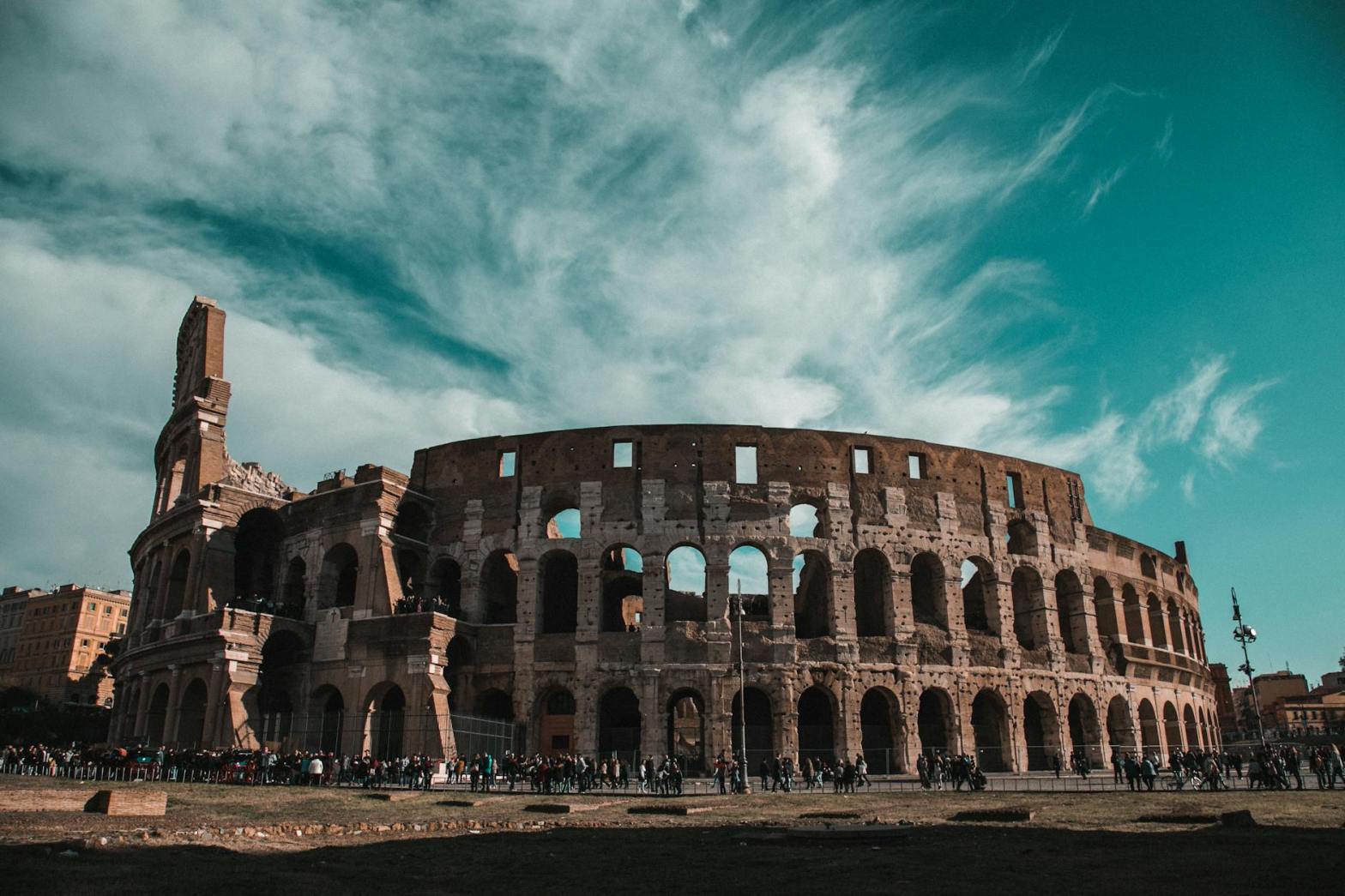
Empire or Reign of God
Empire or Reign of God
Christmas
There rose an empire based in Rome;
fine ruins still recall its fame.
They said their emperors were gods;
few people now would praise their name.

In conquered lands a child was born;
his fate to die by empire’s will.
Now though two thousand years have gone,
his birth and death are honoured still.

The Caesars did not save the world
as their supporters thought they would,
nor bring world peace through victory,
as several tyrants claimed they could.

The one we call the Prince of Peace
did not seek power by making war.
Peace comes through justice he suggests:
his words were good news for the poor.

No empire when God’s kingdom comes;
no privilege, no rule by wealth!
Resources and respect are shared
so all have what they need for health.

Though peace through justice may seem slow,
yet slaves were freed and women vote.
Those once despised now teach and lead,
acknowledged for their works of note.

Though many mock and some abuse,
still Jesus’ people dare believe
that what he taught and how he lived
can bring the change Earth must receive.

His mother spoke of empire’s doom:
God lifts the lowly, might will fall.
Oppressive rule may have its day:
God with us loves us through it all.

And that’s the lesson this world needs:
be with each other, not against!
Then love reveals transforming ways
and opens up what once was fenced.
	Barbara Messner 22/12/2025
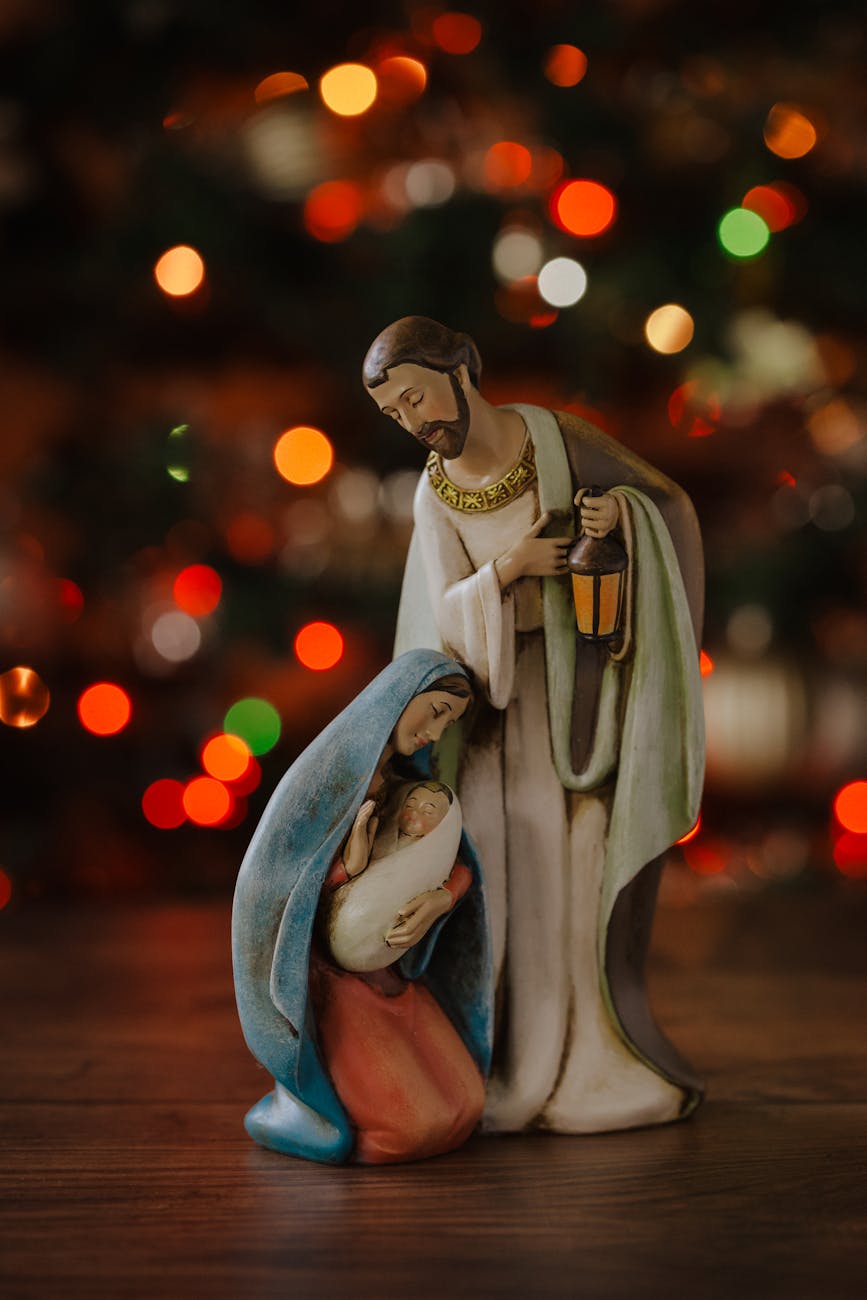
Joseph, Husband and Father
Joseph, Husband and Father
Advent 4; Matthew 1:18-25
Though Joseph’s doubts might well have sired his rage,
he did not choose that Mary face disgrace.
He’d free her from their bond and plead his age,
provide for her in some secluded place.
An angel in a dream cast doubts aside:
this child’s conceived by Holy Spirit’s will,
so Joseph need not fear nor Mary hide –
she is beloved of God and Joseph still.
Enabling and supporting is his role.
Suspicion he let go without a trace,
though other men might brood on toxic pride.
He modelled humble dignity of soul,
and showed the growing child an abba’s grace.
Acceptance turned to love as heart stretched wide.
	Barbara Messner 18/12/2025
Are You the One

Are You the One
Advent 3; Matthew 11:2-11
Jailed by Herod, John suspected
he would not roam wilderness again,
or forage there for wild honey.
His life would soon be forfeit
to a corrupt king’s lustful whim.

Then he sent to Jesus to ask him:
“Are you the one who is to come
or are we to wait for another?”
He feared his hope was delusion,
his prophetic ministry a failure,
his looming fate absurd and futile.

Jesus asked that John’s disciples
tell him what they’d seen and heard:
the healings that Isaiah foretold,
the good news brought to the poor –
but in prison there’s little good news,
and one beheaded cannot be healed.

Jesus realized John envisioned
some more dramatic liberation:
the mighty cast down from their thrones,
the lowly lifted up and fed,
as Mary in her song had prophesied.

John’s despair held him captive,
more so than chains and prison bars:
Jesus’ words begged him to understand:
“Blessed is anyone who takes no offense at me.”

Jesus said there’s no-one greater
than John among those born of women,
yet the least in the kingdom of heaven
is greater than he. I like to think
that this double-edged praise gave comfort
and maybe John took the hint
to hope for more life after death.

He preached that God’s kingdom was near,
and prepared the way for its coming.
When the axe fell at last did he see
that his life and worth were enfolded
in the presence of the one he awaited?
	Barbara Messner 10/12/2025
Voice in the Wilderness
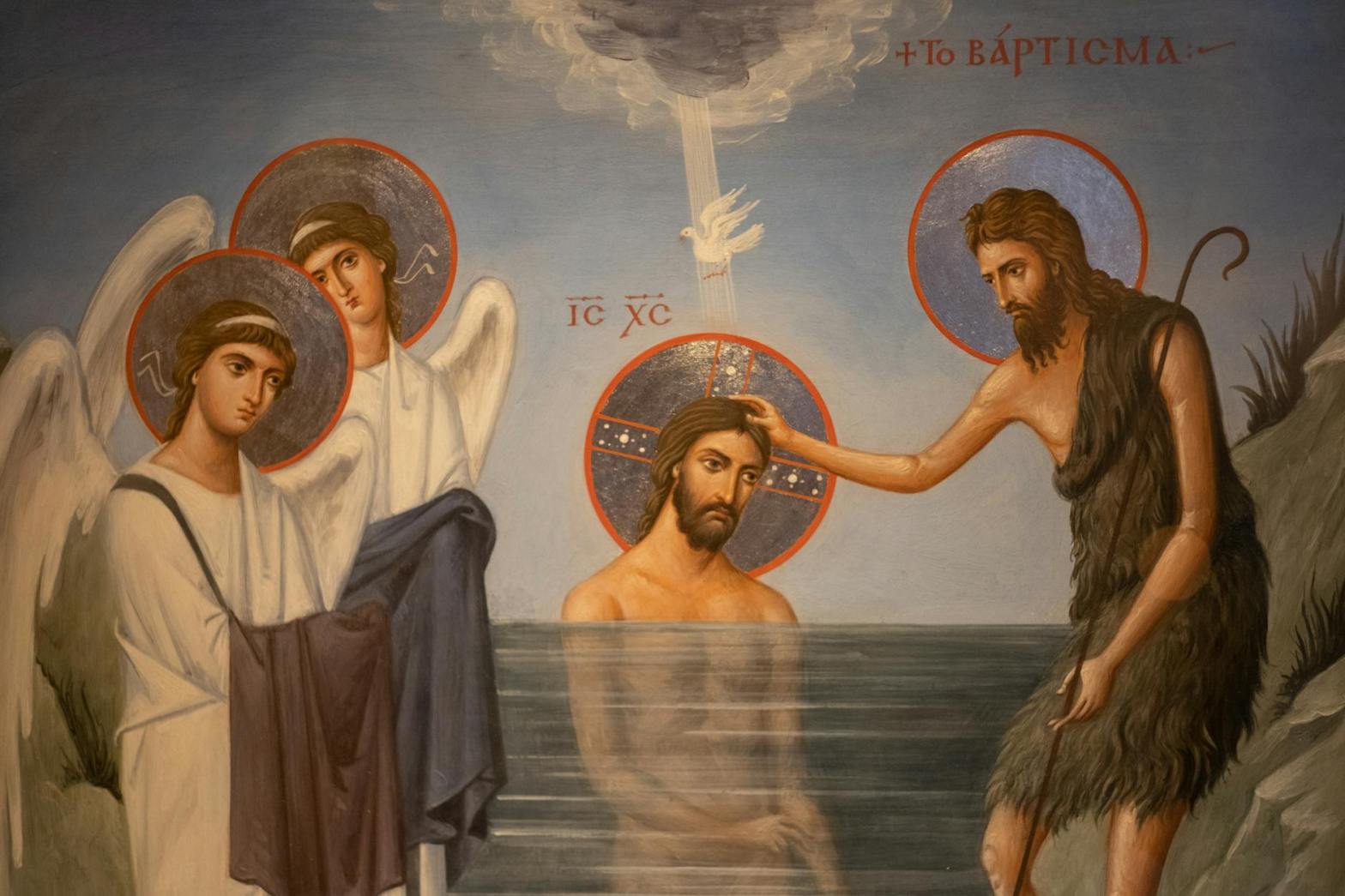
Voice In the Wilderness
Advent 2; Matthew 3:1-12
John, you chose life in wild places,
fed from their meagre resources:
choice of a prophet, enacting
warning to mis-guided people
exiled in spiritual wastelands,
turning aside from God’s promise.

Voice that Isaiah envisioned,
words for a time of transition:
“Make the paths straight by repenting!”
Axes and fire you predicted,
culling and threshing in judgement,
wrath of the Lord – not God’s mercy:
Human One, healer and servant.

Wild Man, let God soften vision:
Jordan, the place for baptizing,
water that nurtures fresh growing,
river that parted for crossings.
Stand in the steps of faith story,
welcome the One who is coming,
not quite the one you expected,
asking from you his baptizing.

Guide him through waters that change him,
rising to hear words from heaven:
“This is my Son, the Beloved.”
Questions still haunted you later,
jailed with your death soon approaching:
“Are you the one we awaited?”
Jesus sent word of the healings,
knowing you feared hope was failing,
fate worse than any blade falling.

John, we are lost in a wasteland,
needing your call to repentance,
threatened by fires we have started.
Call us to sources of water,
cleansing by Spirit immersion,
rising to life and to vision,
named and affirmed as God’s children.
Help us to work for Earth’s healing,
turning from ways that mis-lead us,
open to Love that renews us.
	Barbara Messner 4/12/2025
One Was Taken, One Was Left

One Was Taken, One Was left
Advent 1; Matthew 24:36-44
In the last desperate weeks
of my father’s life,
my mother had a dream:
a vision of Jesus
who waited for Dad with open arms.

I tearfully imagined
the carpenter and the wood turner
sharing their love of creating,
so that Dad would feel at home there,
having always had too many questions
to feel at home in churches.

Soon after, one was taken, one was left.
Mum’s grief devastated her world
like a solitary apocalypse,
and yet it also revealed
love at the heart of everything,
love in despair and hope.

Love wounded her with loss,
emptying out her home and days,
but love also welcomed Dad:
vision and signs assured us
he was free with no need to question,
at one with the surf and stars,
released from all his suffering,
belonging in life beyond death.
The depth of his love drew him in
to relationship stronger than faith.

Mum’s faith, though tested, grew
in a form she felt Dad would share.
She embraced Living the Questions
in a group with her trusted minister,
and her love for Jesus carried her
beyond the old limits and dogmas
into a wondrous mystery
that linked her to all she loved.
	Barbara Messner 27/11/2025
Forgiveness
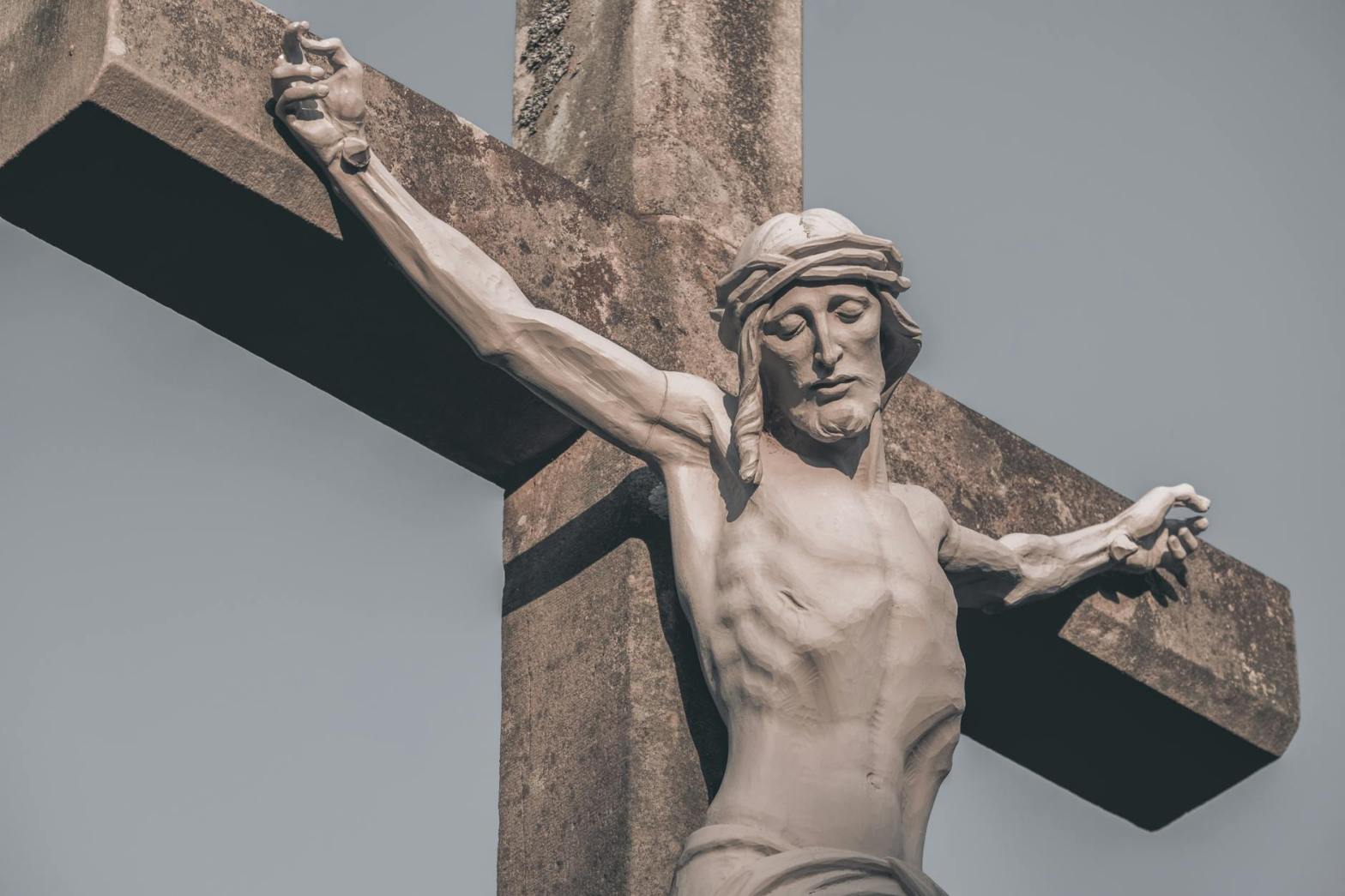
Forgiveness
Christ the King; Luke 23:33-43
They nailed him to the cross but still he prayed:
“Forgive them for they know not what they do!”
They’d learnt the hard way might must be obeyed:
defiant soldiers forfeit life they knew.
What sort of choice is kill a man or die?
Not only death, dishonour lay in wait.
A soldier’s lot was not to question why.
They knew both he and they were pawns to fate.
He hung with arms outstretched and laboured breath
beneath the sign that read: “King of the Jews”.
“God’s chosen one would not be facing death,
so save yourself if you can truly choose.”
Thus he is mocked by many a scoffing voice;
they know not death is his forgiving choice.
	Barbara Messner 19/11/2025
Stones Thrown Down
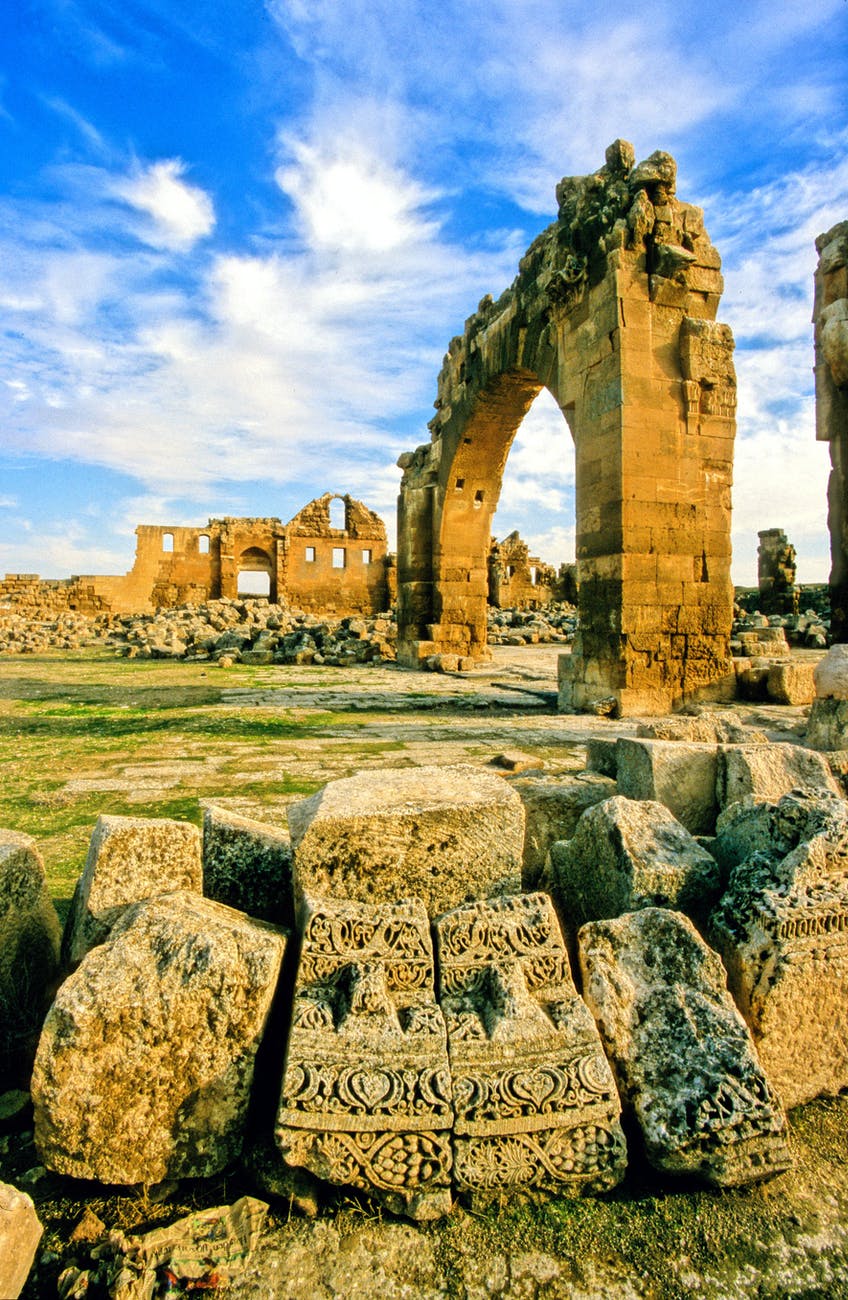
Stones Thrown Down
Pentecost 23; Luke 21:5-19
See, stones like bones still litter sacred ground,
raise disembodied limbs into the sky.
Remembered words passed down preserve the sound
of prayers and chants until the echoes die.
Beware of pride in massive building blocks,
in gilded vessels, jeweled robes and glass.
The rot begins with disenchanted flocks
and pompous clergy who misuse their class.
Rapacious empires trample temple walls
and persecute the prophets who must speak.
From ruins and in prisons Spirit calls,
gives words and wisdom to the poor and weak.
No need to cling to structures set in stone:
it’s love that raises us to be God’s own.
	Barbara Messner 11/11/2025
Responding to Sadducees

Responding to Sadducees
Pentecost 22; Luke 20:27-40
At High School, I was good at debating,
but our arguments there were not heartfelt,
just a mind game where stances were random:
“Yes” or “No” was assigned, not self-chosen.

Now real arguments set my gut seething.
If beliefs are deep seated and fervent,
seems my tongue and my brain lose connection.
If I speak, it is heated and awkward.

It’s far worse if the foe is sarcastic,
starts to mock me and all that I stand for.
I retreat in tight tears and lie sleepless,
still rehearsing ripostes that went missing.

How did Jesus react to this story
of a woman passed down seven brothers?
After life she was still a possession,
childless shame used to mock resurrection.

His reply dignified her with freedom
from their harsh patriarchal assumptions.
Neither married nor given in marriage,
she’s a daughter of God, like an angel.

Though they claimed that the Torah said nothing
that revealed there might be resurrection,
Jesus offered a new way of seeing
that in God their dead leaders are living.

Holy Spirit, I pray to be Christ-like
if I’m answering arrogant powers,
not responding with hurtful intention,
but undaunted, with eloquent reason.
	Barbara Messner 5/11/2025
 Barb, poet priest