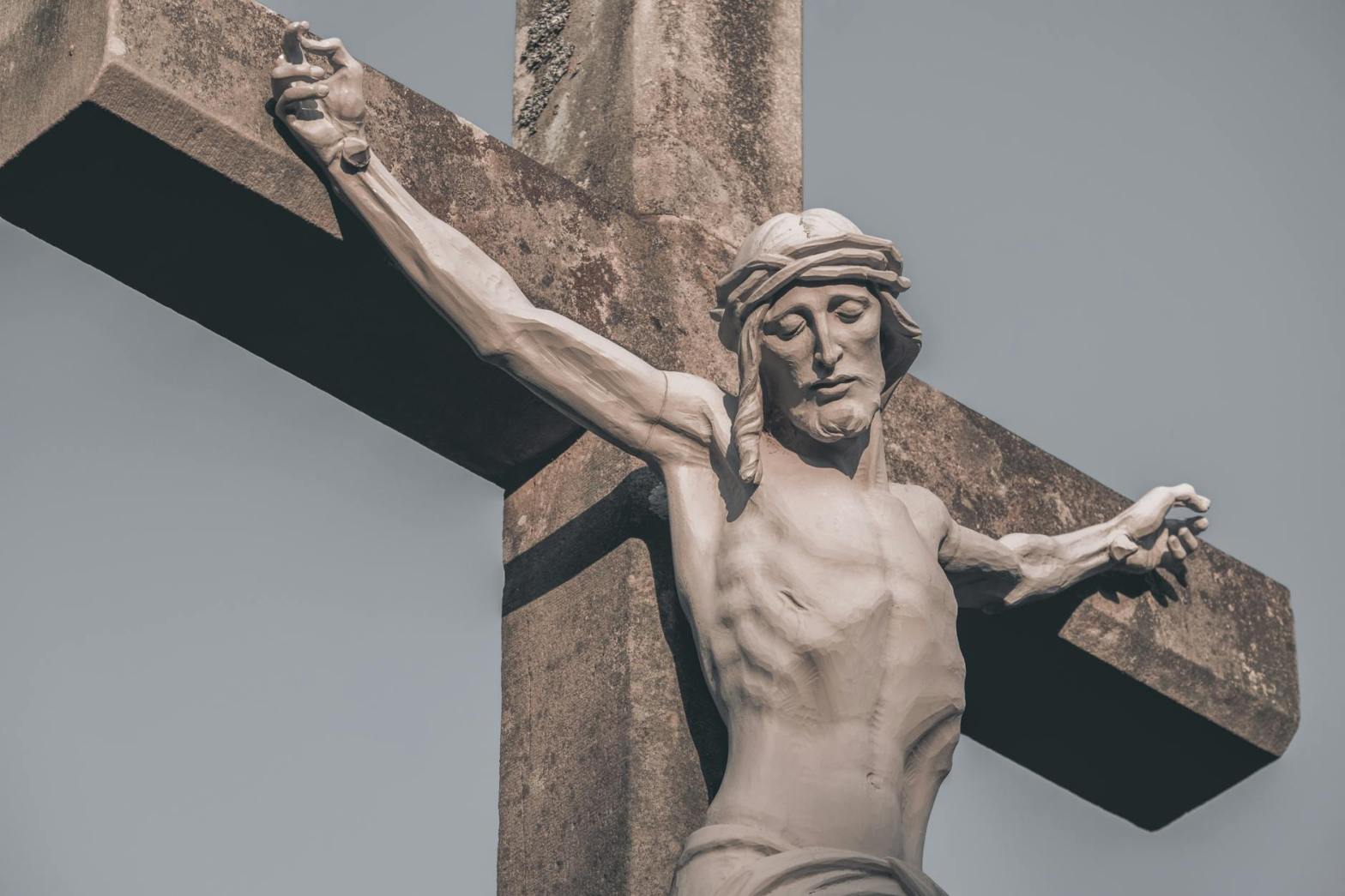
Forgiveness
Christ the King; Luke 23:33-43
They nailed him to the cross but still he prayed:
“Forgive them for they know not what they do!”
They’d learnt the hard way might must be obeyed:
defiant soldiers forfeit life they knew.
What sort of choice is kill a man or die?
Not only death, dishonour lay in wait.
A soldier’s lot was not to question why.
They knew both he and they were pawns to fate.
He hung with arms outstretched and laboured breath
beneath the sign that read: “King of the Jews”.
“God’s chosen one would not be facing death,
so save yourself if you can truly choose.”
Thus he is mocked by many a scoffing voice;
they know not death is his forgiving choice.
	Barbara Messner 19/11/2025
Stones Thrown Down
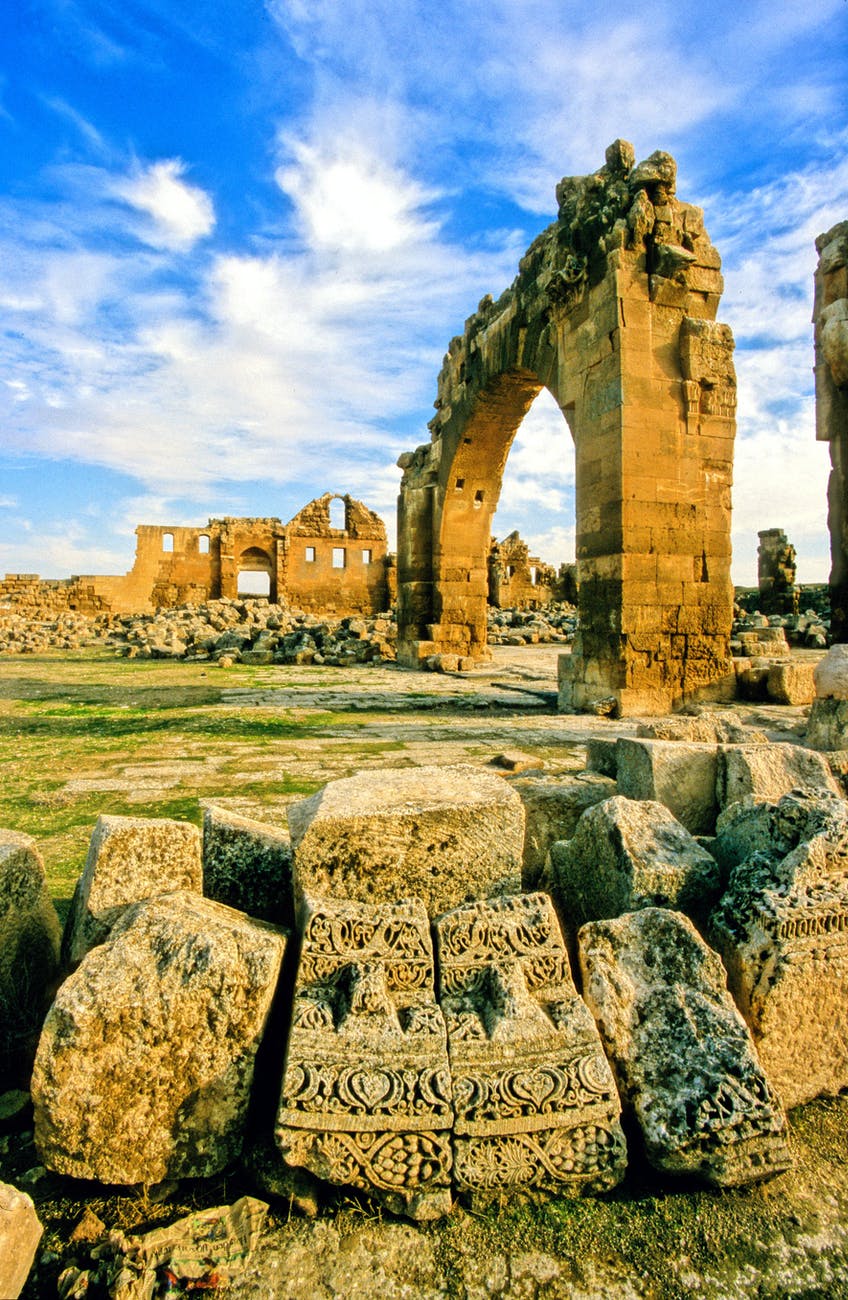
Stones Thrown Down
Pentecost 23; Luke 21:5-19
See, stones like bones still litter sacred ground,
raise disembodied limbs into the sky.
Remembered words passed down preserve the sound
of prayers and chants until the echoes die.
Beware of pride in massive building blocks,
in gilded vessels, jeweled robes and glass.
The rot begins with disenchanted flocks
and pompous clergy who misuse their class.
Rapacious empires trample temple walls
and persecute the prophets who must speak.
From ruins and in prisons Spirit calls,
gives words and wisdom to the poor and weak.
No need to cling to structures set in stone:
it’s love that raises us to be God’s own.
	Barbara Messner 11/11/2025
Responding to Sadducees

Responding to Sadducees
Pentecost 22; Luke 20:27-40
At High School, I was good at debating,
but our arguments there were not heartfelt,
just a mind game where stances were random:
“Yes” or “No” was assigned, not self-chosen.

Now real arguments set my gut seething.
If beliefs are deep seated and fervent,
seems my tongue and my brain lose connection.
If I speak, it is heated and awkward.

It’s far worse if the foe is sarcastic,
starts to mock me and all that I stand for.
I retreat in tight tears and lie sleepless,
still rehearsing ripostes that went missing.

How did Jesus react to this story
of a woman passed down seven brothers?
After life she was still a possession,
childless shame used to mock resurrection.

His reply dignified her with freedom
from their harsh patriarchal assumptions.
Neither married nor given in marriage,
she’s a daughter of God, like an angel.

Though they claimed that the Torah said nothing
that revealed there might be resurrection,
Jesus offered a new way of seeing
that in God their dead leaders are living.

Holy Spirit, I pray to be Christ-like
if I’m answering arrogant powers,
not responding with hurtful intention,
but undaunted, with eloquent reason.
	Barbara Messner 5/11/2025
Blessed
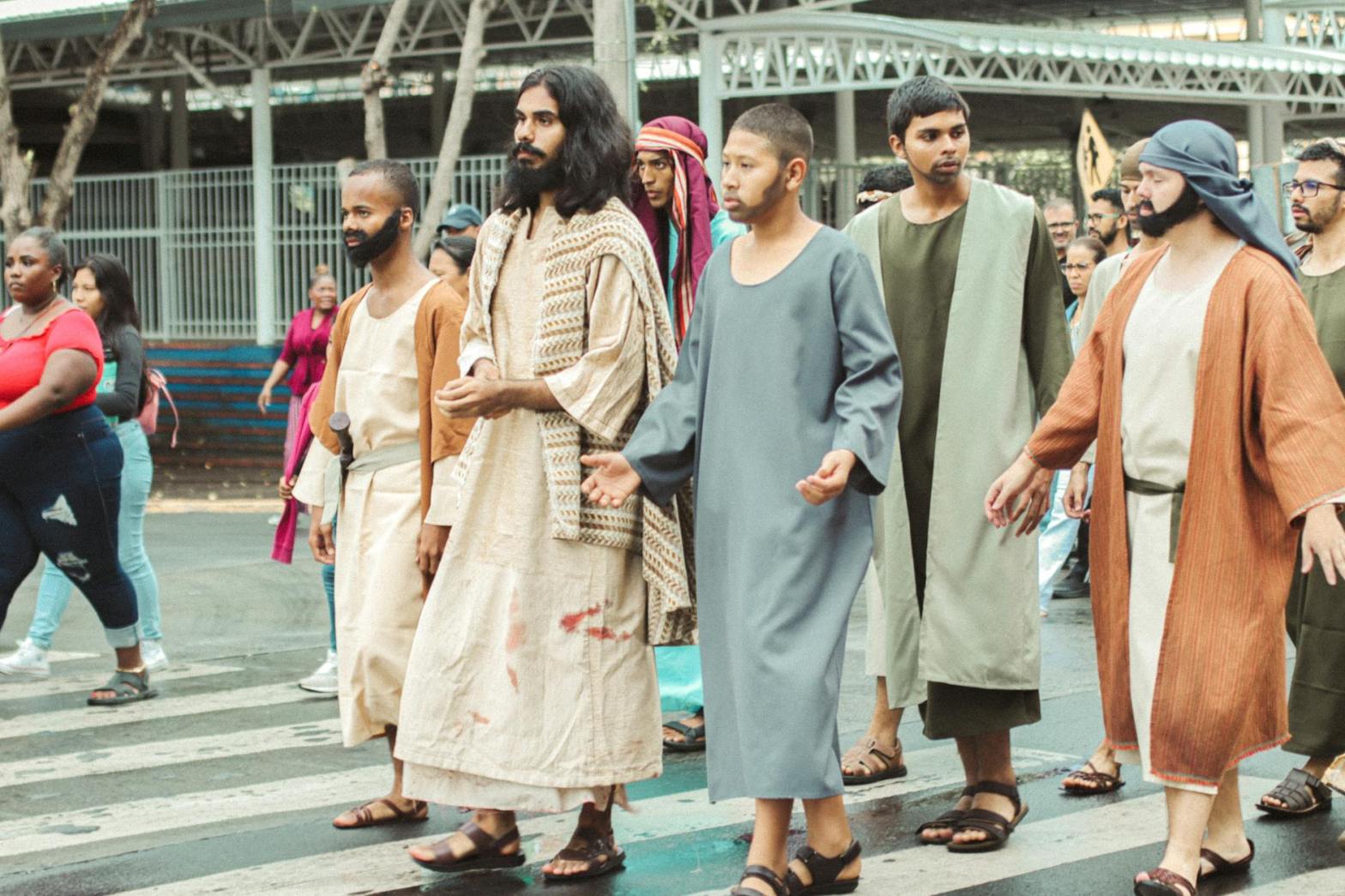
Blessed
All Saints; Luke 6:20-31, Luke 9:1-6, Luke 8:1-3
Jesus said to his disciples:
“Blessed are you who are poor
for yours is the kingdom of God.”
They wandered the roads with him,
having no place to lay their heads.
He sent the twelve through the villages,
to proclaim the kingdom of God and to heal,
telling them to take nothing for the journey –
no staff, nor bag, nor bread, nor money.

Jesus and his disciples chose poverty
to live, express and share the godly life
and they were blessed
by the sustaining ministry of women:
Mary called Magdalene,
Joanna the wife of Herod’s steward,
Susanna and many others
who provided for them out of their resources.

Maybe in being beholden
to rich and privileged families
these women had experienced woe,
like the seven demons oppressing Mary,
but Jesus had freed them
and they had left behind
that world of repressive expectations
and found the consolation
of following and giving.

Riches may seem to offer a good life,
but perhaps we approach the kingdom
when we understand the woes
that mis-used wealth and status
impose upon our world.
Then we are drawn to share resources
and we recognize the blessing
of doing to others
as we would have them do to us.
	Barbara Messner 30/10/2025
Belonging and Receiving

Belonging and Receiving
Pentecost 20; Luke 18:15-17
It is to such as this
the realm of God belongs:
the baby learning how to be
whose sustenance is love.

Her joy is to explore
the colours, shapes and sounds;
to her, the world’s new born,
created for delight.

Safe held in cradling arms,
she smiles to know a face,
then seeks her mother’s milk,
warm flowing from the breast.

Show me the way to be
as joyful as a child
exploring sights made fresh
as eyes perceive anew.

I smile to glimpse your face
play peek-a-boo in clouds
that mound like glowing breasts
back lit with hidden sun.

Help me to make a space
for learning stripped of words,
then taste again the flow
of meaning that sustains.

Let me be touched by God
as Jesus bids “Be still!”
to voices that reject
the child within us all.

Our liturgies and laws
must not control who comes
to hear the teacher teach,
receive his healing touch.

Give birth in us again
to soul’s simplicity
that chortles in surprise
rejoicing in your world.
	Barbara Messner 22/10/2025
The Need for Prayer
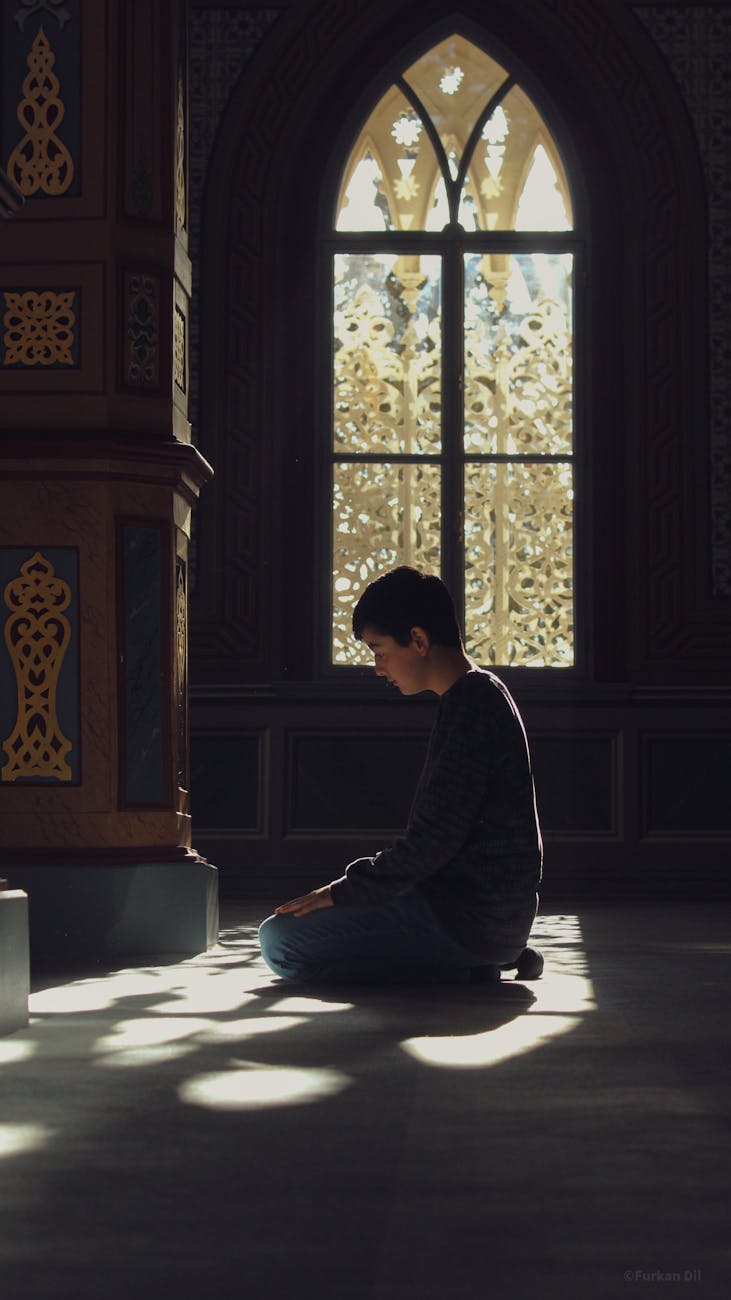
The Need for Prayer
Pentecost 19; Luke 181-14
I’ve got a problem with prayer
and it’s not just my discomfort
with Jesus’ teaching story.
I don’t think the God I know
is anything like the unjust judge
worn down by determined nagging.
Do we think that incessant praying
will prompt God to enforce justice?

I get Jesus’ point about the need
to pray always and not lose heart.
I admit that my prayer is uncertain,
sporadic, no longer by the book.
I don’t think God needs reminding
of what God already painfully knows
nor can we tell God what to do.

I do see the point of lament,
crying out to God day and night
and knowing that we are heard.
I believe that God does save,
sharing the pain of oppression
even of an unjust execution.

So how do I think that prayer works
beyond being heard and understood
and knowing we are not alone?
I do believe prayer has power
that activates spiritual networks
that no technowhiz can hack
or technocrat exploit for gain.
How that power ebbs and flows
or how it affects our lives
is sacred mystery to me.

I believe that prayer softens hearts
so that God within can be heard
saying: “This I require of you –
to do justice, to love kindness,
to walk humbly with your God.
If people had that law in their hearts,
then justice and mercy would prevail
and no-one would exalt themselves
and disrespect the humble and poor.

I heard a woman bishop who prayed
for justice and mercy to be given
to those who are crying in their need
and she was mocked and threatened
by the leader her prayer might have changed.
Yet I’m sure there were those who were moved
to add their voices to her prayer
and those crying out took heart,
assured that they were not alone,
for God and the godly are with them,
sharing their yearning for justice
and doing what they can to bring change.
	Barbara Messner 16/10/2025
All the Earth Shall Worship
All the Earth Shall Worship
Pentecost 18; Luke 17:11-19, Psalm 66:1-11, 2 Timothy 2:8-15
Ten lepers were cleansed
and one returned to give thanks.
He praised God with a loud voice
and Jesus said to him:
“Your faith has made you well.”

Yet he was a Samaritan
and some despised his faith
for worshipping on a mountain
and not in the temple
and for incorporating beliefs
from pagan religions.
Jesus said to the Samaritan:
“Get up and go on your way.”
He didn’t say: “Come with us
and go on our way.”

Perhaps faith is not a matter
of having the only right beliefs:
rather faith is a grateful response
that gives honour to the divine
and understands that there is One
who holds our souls in life
and heals that which isolates us.

In the letter to Timothy
Christians are strongly urged
to avoid wrangling over words,
which does no good
and ruins the listener.
Do Christian denominations today
take that warning to heart?

It is not for us to judge
another’s words of interpretation,
although we might dare to offer
a re-imagined vision
of liberty and justice
as prophets are asked to do.

If all the Earth is to worship,
let us respect each other’s words,
valuing the insights of other traditions
and meeting in the joy
of shared gratitude and praise.

Whatever the words mean to us,
let us share in singing praises
and in praying our thanks
for mountains and hallowed buildings,
for healing and cleansing
and for seeing people brought
into places of liberty.
	Barbara Messner 9/10/2025
Is It Faith?

Is It Faith?
Pentecost 17; Luke 17:5-10
Is it faith
that causes my heart to lift
as a pair of black cockatoos
soar into my sight,
the slow surging strokes of their wings
in perfect unison?
Is it faith
that brings tears of joy
to my eyes
and bids me cry out
in gratitude:
“Oh beautiful, beautiful!”

Is it faith
in the Creator
of these winged messengers,
or is it love
that recognizes in them
a spiritual connection
to me and to the Divine,
a link that I barely
have the awareness
or cultural wisdom
to understand,
but still I respond
in longing and reverence?
In that moment
faith and love dance together,
graceful in unison
like the black cockatoos.

I do not need to hope
that my faith might increase
enough to move mountains
or to plant a tree in the sea
or to attract a crowd of newcomers
from our secular society
to embrace formal liturgy
in a traditional church service.

Instead I dare to hope
that I will have faith enough
to keep on rekindling
the gift of God within me,
to strive and fail and still to serve,
trusting that my tears
of struggle and self-doubt,
of grief and painful empathy,
of joy and grateful insight,
are drops in the living water
Christ offers a thirsty world
beside our parching wells.
	Barbara Messner 30/09/2025
Chasms Between
Chasms Between
Pentecost 16; Luke 16:19-31
Over the years and across the wide Earth
those who have much exclude those who are poor –
maybe with claims of superior birth,
whiteness or maleness, tradition or law.

Some say that wealth is a blessing they’ve earned:
fittest survive while the lesser won’t thrive.
Those they keep down find best efforts are spurned:
doomed as outsiders, they’re barely alive.

Jesus tells stories that turn upside down
all such pretensions that keep a closed gate.
Francis left riches to serve as God’s clown:
left behind Father and fortune and hate.

“Rebuild my church!” was the call that he heard;
poverty chosen in joy was his way,
walking the roads with a fresh humble word,
challenging wealth of the Church in his day.

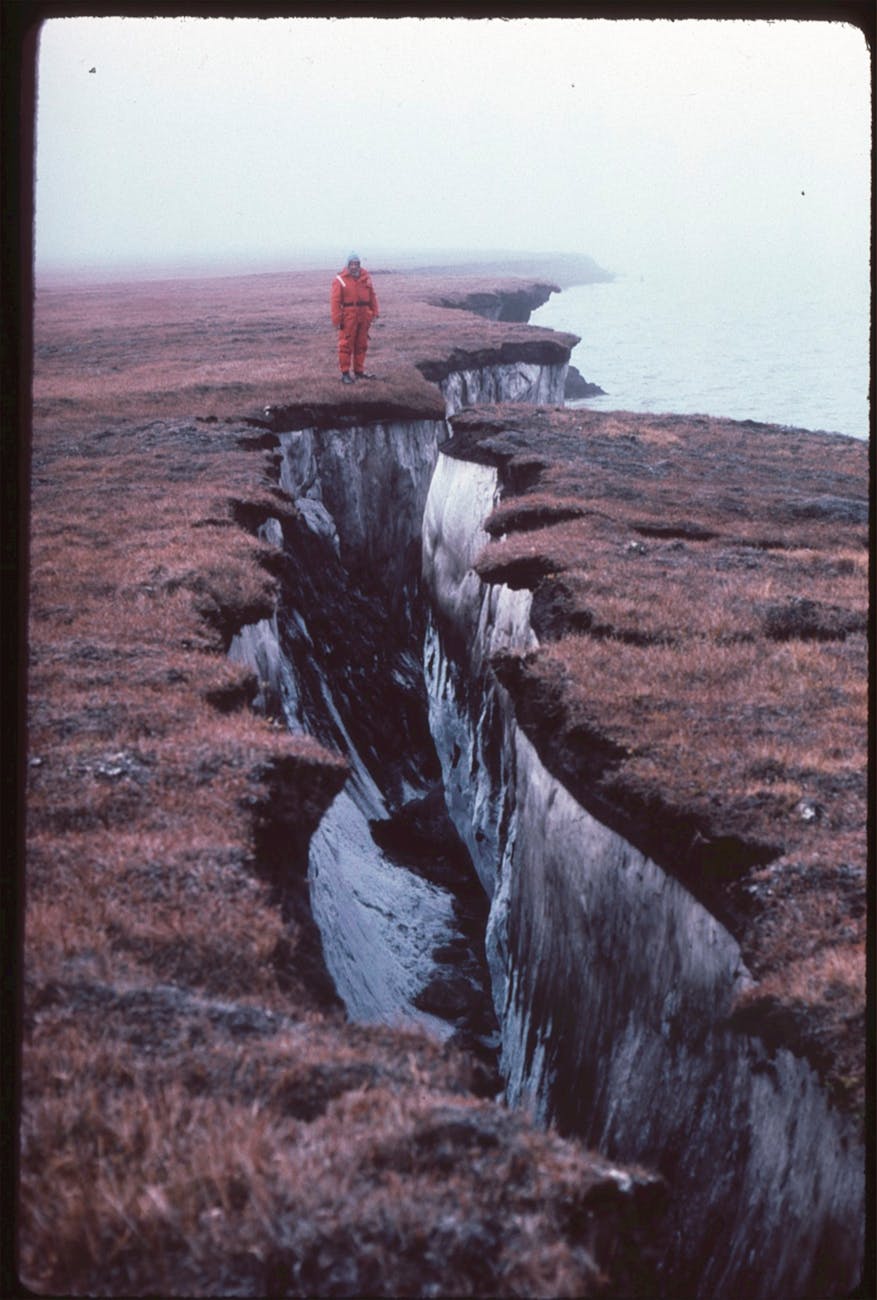
Is there a chasm we try to maintain,
keeping out God and the suffering poor?
Do we inherit a balancing pain
when we keep difference outside of our door?

“Poor lifted up and the mighty brought low?”
Prophets like Mary have sung this bold song,
seeing that change is too late and too slow,
calling for action to right what is wrong.

Chasms are many and most we have made,
blasting away and not counting the loss.
When we seem stranded in fire we have laid,
bridges appear in the shape of Christ’s cross.

Do we hear truth from one raised from the dead,
open our hearts to compassion and hope,
gifts of God’s kingdom in wine and in bread,
or, heedless, slide down our wealth’s slippery slope?
	Barbara Messner 24/09/2025
Serving Two Masters
Serving Two Masters
Pentecost 15; Luke 16:1-13
In practice, I have found that serving God
makes serving wealth a choice beyond my means.
The most I hope for is to have enough,
but surely some would see “enough” as “wealth”.

And I am grateful that it was to me:
the work I loved brought in enough to live
with all the basic comforts of our day –
to many in the world unheard of wealth.

I scratch my head to guess how Jesus’ tale
of manager and rich man might apply
to money woes in parishes today:
self-serving shrewdness seems in short supply.

Preoccupation with the deficit
can master us as much as riches might,
distracting us from following the Lord
who served without a place to lay his head.

Our buildings and their trappings are a wealth
that take attention from our humble God
who shared our human poverty and risk
and died at hands of those with wealth and power.

Now our enough must last our family
through ageing’s unpredictable expense.
How can we give enough to help the poor,
serve God and others and retirement’s needs?

Dilemmas for parishioners and me,
and this week’s gospel leaves me anxious still:
though Jesus satisfies my deepest need,
possessions are the standard here for wealth.
	Barbara Messner 18/09/2025
 Barb, poet priest