Singing after Silence
Advent 2; Luke 1:68-89 (Song of Zechariah)
Zechariah sang after silence.
Without that muted waiting,
would he have found his song?

Doubt left him wordless,
no questions or answers, just listening.
Long awaited birth woke eloquence.

Our world is clamorous;
impatient with waiting, we exile silence,
deaf to the still, small voice of mystery.

There’s no hope of birth
without the growing space of gestation,
without fear of risk and labour’s primal cries.

Too many songs now are noise,
howling platitudes of love lost.
The God of love waits in silence.

Can waiting attune us
to hear starry songs of angels,
and to sing dawn-fresh words of praise?
	Barbara Messner 6/12/2024
Advent Song

Advent Song
Advent brings a pregnant waiting
hoping for divine surprise.
We expect the birth of Wisdom,
truth that’s shaped to fit our eyes:
gift of being needs our seeing
meaning in a baby’s cries.

Advent intersects with prophets
exiled to beyond the walls,
speaking of the need to journey
and to heed the word that calls:
lonely teaching, dazed with reaching
to where light or shadow falls.

Advent sings of angels waiting
for the call of shepherds’ eyes.
Waiting makes the space for wonder
under night’s resounding skies:
star-lit guiding, hope providing,
gift and giver, poor and wise.

Advent time is out of sequence
with the New Year of the world.
New life comes beyond our comforts
where the hard-worked beasts are curled.
All creation sings elation
to the new born hope unfurled.
(Words by Barbara Messner 2014,
Tune Regent Square by Henry Thomas Smart, tune of Glory be to God the Father TiS142)
Song for the Counter-cultural Reign of Christ
Song for the Counter-cultural Reign of Christ
John 18:13-37 Tune: O Waly, Waly, English trad. TiS654
The tales we tell of those in power
show kings and tyrants, warped and sour,
who cruelly trample those in need.
While many starve, they richly feed.

Some rulers build a guarded wall,
while Christ’s way causes walls to fall.
Some seize the law to serve their ends,
to harm their foes and favour friends.

Some ruthlessly pursue a war
that robs their neighbours to gain more.
The leader’s ego makes the call;
the helpless ones are robbed of all.

So if we choose to call Christ King,
let’s question still the words we sing.
His meaning shows in poverty;
his wisdom seeks humility.

The poor are precious in God’s sight,
and love will serve, not rule in might.
Christ lives for truth and calls the true;
his offered life makes all things new.
	Barbara Messner 20/1/2024
Don’t Judge on Apearances
Don’t Judge on Appearances
Pentecost 26, 1 Samuel 1:4-20, Mark 13:1-11
Though lofty in appearance, temples fall.
Our preconceptions dazzle us or blind,
and prejudice makes tyrants of us all
when how we mock or prize distorts our mind.
Poor barren Hannah mouthing silent prayer
was judged as drunk when Eli misconstrued.
She had to strip her desolation bare
before he blessed, instead of being rude.
She chose to hear God’s promise had been made,
though spoken by a priest with faulty sight.
Prophetic Jesus saw great stones, well laid,
would still be scattered by an empire’s might.
He warned false Christs can lead belief astray,
yet Spirit in our trials gives words to say.
	Barbara Messner 10/11/2021
Widows’ Stories Revisited
Widows’ Stories Revisited
Pentecost 25; Mark 12:38-44; Ruth 3:1-5, 4:3-17
Though Jesus and a scribe spoke with respect,
and shared what love of God and neighbour meant,
the scribes with pompous egos he’d reject,
and call them hypocritical and bent.

He claimed that widow’s houses they devour,
then make a show of lengthy pious prayer.
They used the law to profit by their power
which should have been their means to offer care.

Then Jesus noted how a widow tossed
her last coins in the temple treasury -
a gesture of despair at all she’d lost,
or selfless act of generosity?

For Ruth, Naomi had a risky plan –
perhaps it was these widows’ last resort?
The harvest over, they must get their man,
or starve if legal justice was not bought.

So Ruth uncovered more than just the feet
of Boaz sleeping off his harvest fest.
He’d showed regard her body must complete:
stir him to make his kinship claim the best.

These stories have a sentimental guise,
with love and faith portrayed as pure and sweet;
or is the truth two women, earthy wise,
and one defiant victim of deceit?
	Barbara Messner 6/11/2024
Love God, Love Neighbour

Love God, Love Neighbour
Pentecost 24; Mark 12:28-34
Do I love God
with heart, soul, mind, strength?
Whether I love with all
of all of the above
I have to doubt.

Over the years my heart
has had its passions
and its breakages,
built its walls,
and found safe ways
to value and appreciate,
but how whole-hearted
in God’s eyes?

My soul, that intimate stranger,
has no form or face
I can be sure of –
sometimes me, often mystery.
Mind, brain, psyche
are entangled in soul,
reflected in words and song,
focused in listening.

As I grow old,
memory, skills, emotions,
purpose and energy
all drift in and out
of who I have become.
As for strengths,
I still have some,
honed by age,
but fear my weaknesses,
and looming losses.

Do I love my neighbour,
and love myself with insight
that grounds concern for others?
Yes and no, here and there,
real enough but never enough.
I cannot bear the news of the world,
the daily deluge of random pain
I cannot touch or heal.
Yet I have sat with the dying
and their grieving families
and felt a love and rightness
in our presence together
beyond my own capacity.

I think it’s the same
with my love of God:
gift from beyond,
resonance within –
together it exceeds
all that I know
of all of me.
	Barbara Messner 31/10/2024
Healing the Blind
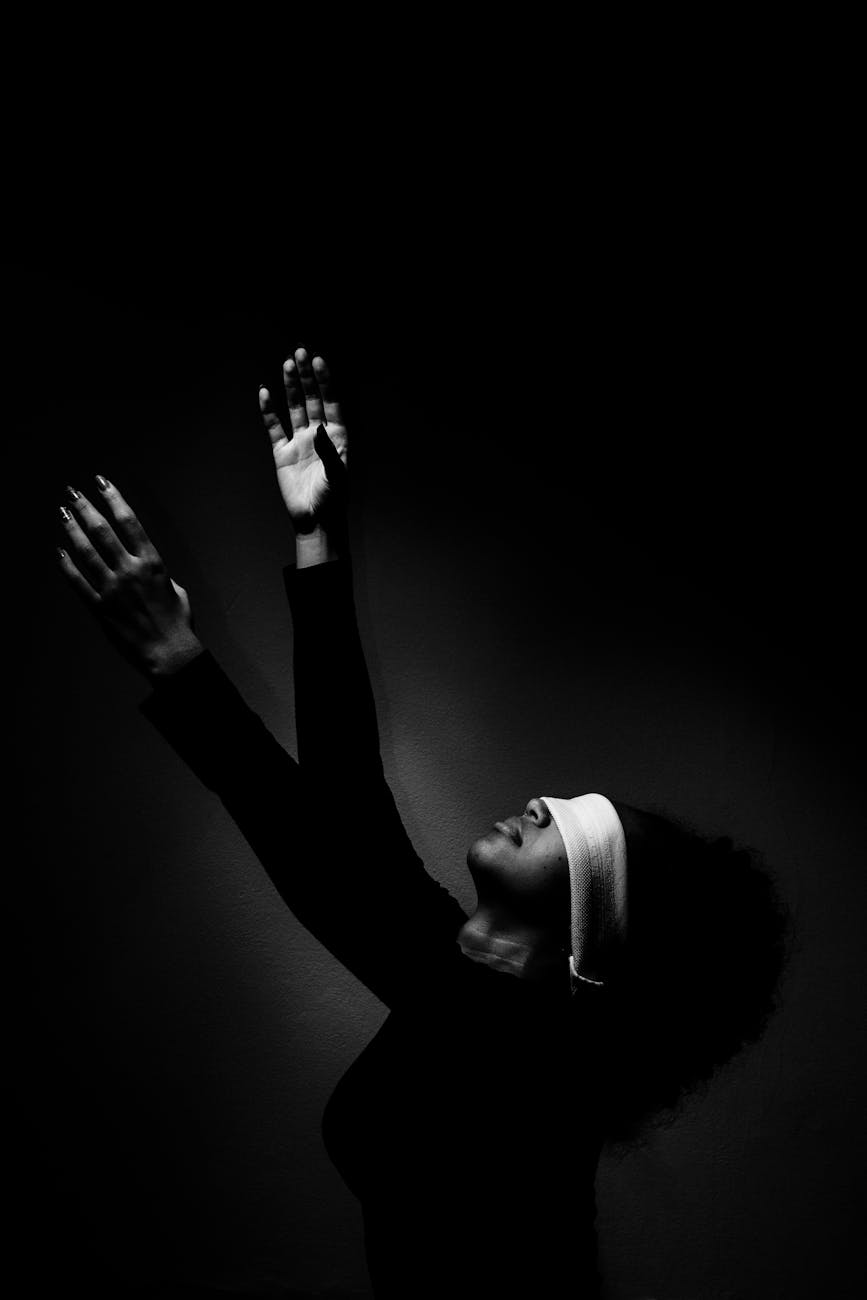
Healing the Blind
Mark 10:46-52
Look round and in for signs of loss of sight
unrecognized by those left in the dark,
maybe because they think they’re always right.
Their inner blindness leaves no outer mark.
They cannot see how racial hatred harms,
or what life might be like for refugees.
Their minds are blank to climate change alarms,
or to the news that homeless sleepers freeze.
Blind beggar by the road had inner sight,
and cried for mercy to the one who hears.
Some told him to be silent in his plight,
but he yelled loudly at their deafened ears.
“My teacher, let me see again,” he cried,
and, sight restored, walked on at Jesus’ side.
	Barbara Messner 20/10/2021
Word from a Whirlwind

Word from a Whirlwind
God’s Answer to Job Pentecost 22; Job 38:1-7
Why ask why? My realm’s too wild and wide,
this cosmos too diverse, immense and free
to bend its complex meaning to reward
or punish what a creature strives to be.
Gird up your loins, you mortal! Answer me!
How dare you with your God contend, and plead
your innocence to prove your Maker’s guilt?
Mine is the form and void; mine, steed and weed,
monsters and microbes, star system and lair.
Chaos to cosmos – can you walk that path?
Predator, prey – apportion both their share?
I give and in the time of trial take back.
By Satan’s claim or chance you face the rift.
Confront the whirlwind. Presence is my gift.
Barbara Messner circa 2005
Entering the Kingdom of God

Entering the Kingdom of God
Pentecost 21; Mark 10:17-31
Children, how hard it is
to enter the kingdom of God,
and yet how simple.

Riches get in the way
because getting and spending
obscures the simplicity
of growing and making
and subtracts from moments
of stilled awareness.
Possessing robs giving of mutuality;
where then is shared gratitude
for all that is given?

Achieving gets in the way
because it compares us to others
and competes for more.
It desires acknowledgement
accountability and aspiration
when all that is needed
is our simple uniqueness,
knowing we are loved
for who we are as children of God,
and not for our achievements.

Power gets in the way
for power over others
uses and manipulates,
serving its own agendas.
God’s kingdom belongs
to those who are vulnerable,
setting aside entitlement,
not too proud to serve
respectfully, open heartedly.

Children, how hard it is
to enter the kingdom of God,
and yet how simple.
Simply breathe, be still,
be open and aware:
you are already there.
	Barbara Messner 10/10/2024
Sonnet for St. Francis
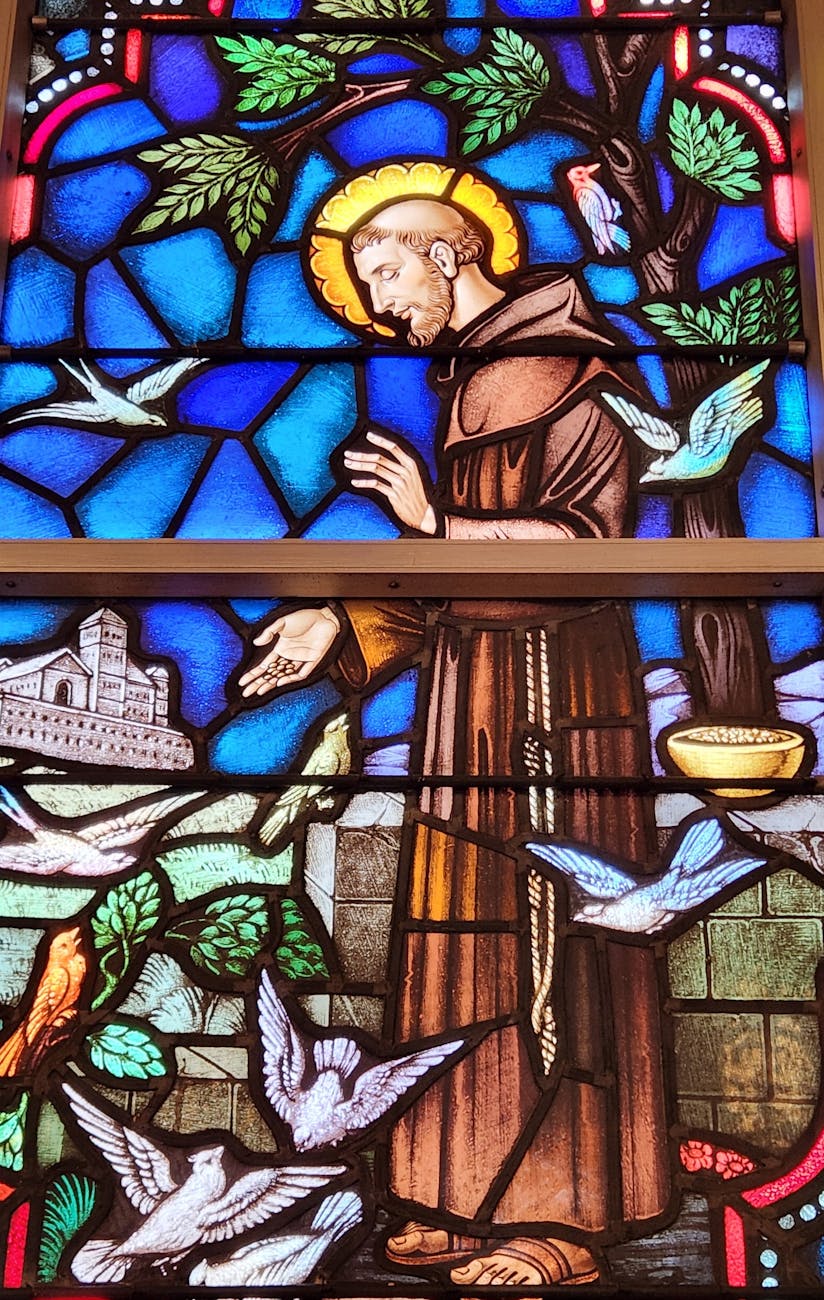
Sonnet for St. Francis
Though Francis bore the marks of Jesus’ pain,
he walked the roads in simple joy and danced.
He cast aside the robes of merchant gain,
embracing poverty as life enhanced.
A fearsome wolf at his request grew tame –
for animal and town a happy end.
He preached to birds and even dared to claim
that sun and moon were kin, and death a friend.
The Spirit urged him to rebuild the church:
both stones and preaching seemed a burden slight,
with soul and body yoked in eager search,
his life a guiding fire, a beacon bright.
The centuries have not eclipsed the sight
of this man, naked, singing dawn alight.
	Barbara Messner 28/09/2021
 Barb, poet priest