
Loving my Enemy
Epiphany 7; Luke 6:27-38
To call that man my enemy
would seem too strong a claim,
yet still I feel unloving,
remembering his name.

A bully in the workplace
the three of us agreed.
It’s many years behind me,
and still I am not freed.

One dived into a bottle,
one left for pastures green.
I plodded on, diminished,
with wounds that felt unclean.

I never learnt to stand there
and turn the other cheek,
though fight and flight had failed me,
and tears and fears seemed weak.

So Jesus, though your teaching
could truly set me free,
and keep the world from warfare,
how hard it seems to be!

I try to understand him,
his hidden hurt and strain.
I see the need for loving,
but anger clings to pain.

The secret of forgiveness –
“They know not what they do!” –
is born of such deep loving
it can make all things new.

I pray to want renewal:
undo this knot within,
so I look back unflinching,
and let your love flow in.
	Barbara Messner 15/02/2022
Blessings and Woes

Blessings and Woes
Epiphany 6; Luke 6:17-26
Confront us with the mystery
that blessing graces misery
while fortune loads the dice for woe!
Our poverty can strip away
the gilded idols of our day,
while wealth can stifle what might grow.

Our hunger seeks out nourishment
and hungry souls will be content
with nothing short of Spirit source,
but bellies filled beyond excess
find illness shows them more is less,
and vacant souls have no recourse.

Our grieving can unveil the heart,
and though we painfully depart,
our journey opens us to joy,
while those who mock and laugh and play
will blunder on their merry way
to face the depths that can destroy.

There’s blessing in rejection too:
the hateful words they hurl at you
bounce off the Word that God reveals,
while those who pay the price of fame
risk losing their God-given name,
seduced by flattering appeals.
	Barbara Messner 8/02/2022
I have just finished 12 months as locum in the Parish of Belair, a fulfilling experience but I need time out for a bit. Poems for the next few weeks will probably be old ones, unless the muse has other ideas.
Responding to the Calling
Responding to the Calling
Epiphany 5; Luke 5:1-11
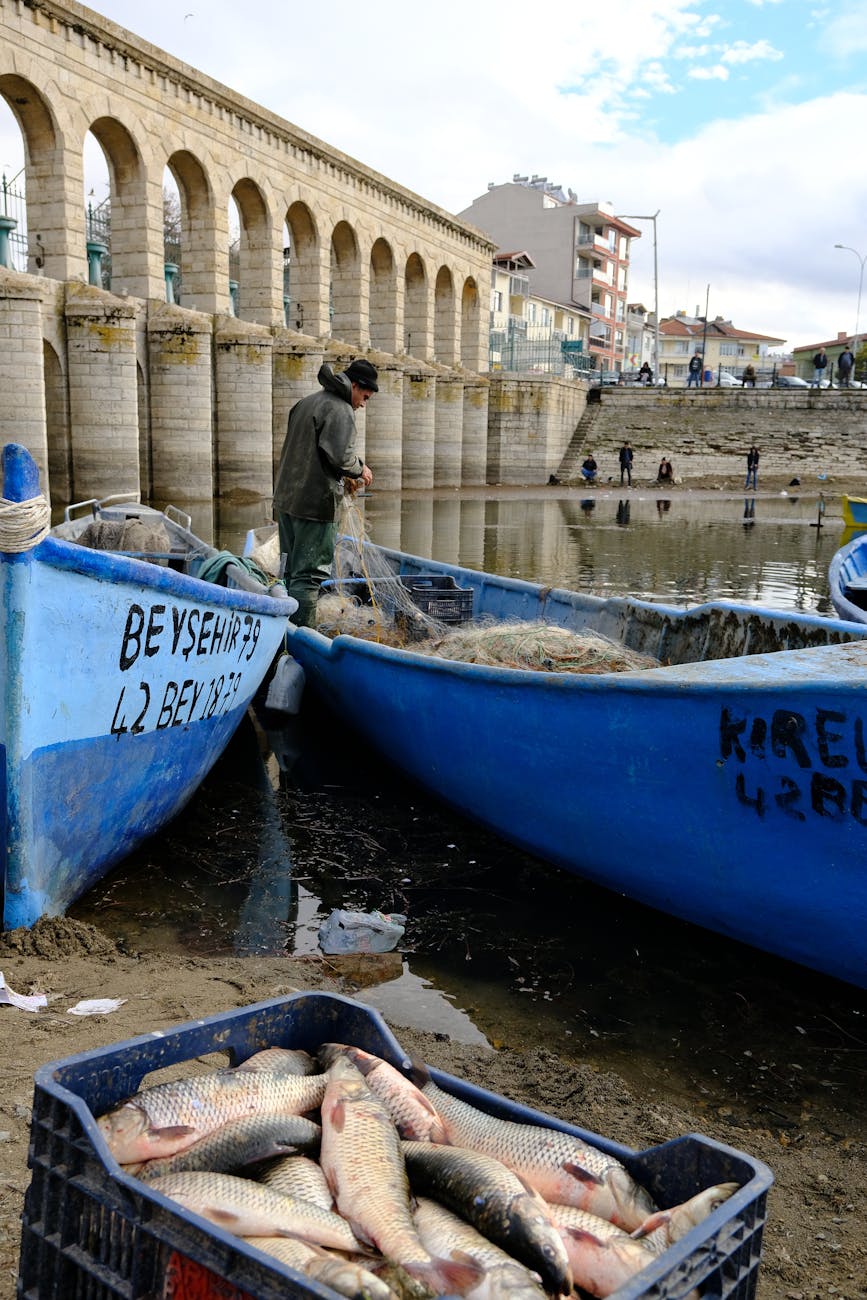
No, the miracles weren’t what convinced us:
neither finding of fish we’d been missing,
nor the healing of someone at Simon’s,
neither stories of words from the heavens,
nor a dove flitting down on his shoulder.
Maybe these were for some confirmation,
and for those left behind, compensation.

As for us, we were hooked when we heard him,
and we followed all over the city,
while our fishing was left until evening,
and too often we turned back with nothing.
For a time, we avoided commitment,
clung to living in ways grown accustomed.
Something hankered to keep the familiar;
something stronger was yearning for meaning.

On the shore he was followed by people
as eager as we were for teaching,
or hoping to reach out for healing:
so many, too close to the Master!
When he chose Simon’s boat as a platform,
it seemed right to find places beside him.
We were washed by the words of his wisdom,
minds and hearts were filled almost to breaking.

Yes, I guess we resented it slightly
when he showed us the spot to go fishing,
but we softened to share his enjoyment;
he deserved a reward for his teaching.
When our nets became laden to bursting,
we saw visible what was reflecting
the abundance our souls had discovered.
Without Jesus, we’d always be empty.

We left nets full of fish for the others,
knowing some would make use of the bounty,
and we followed him, drawn by a current
too strong for our token resistance.
As our eyes sought out wider horizons,
we found joy in his very existence,
and sang praise for unfolding becoming
in a world that was new to our wonder.
	Barbara Messner 6/02/2025
Reflections

Reflections
Epiphany 4; 1 Corinthians 13;12,13
If we look to see others in dusty mirrors
where we are accustomed to find our face,
they are distant reflections of shapes and shadows
that cannot be us, in their separate space.

Now if only we dare to release our image,
and turn our regard to look face to face,
then we both will be more fully known and knowing
and recognize truth that we share in grace.

Then when knowing acknowledges known together,
there’s hope for a wisdom of deep respect;
we will drink at the wellspring of faith and loving,
and in that clear pool one and all reflect.
	Barbara Messner January 2019
Good News to the Poor

Good News to the Poor
Epiphany 3; Luke 4:14-21
On January 26, 1788,
an English fleet landed
here, and formally possessed
what was not theirs to possess.
They did not even acknowledge
that they had invaded
the lands of the Gadigal nation,
one of many nations
who lived as custodians
of country for 60,000 years.

Now let us respect Survival Day,
and if we celebrate Australia Day,
let us also repent and lament
invasion, genocide, assimilation,
the Stolen Generation,
deaths in custody,
the White Australia Policy,
and continuing racism,
misogyny, homophobia,
cultural, ethnic, environmental
blindness and exploitation.

Now in the allegedly United
States of America,
a leader has arisen,
seducing with money
and exploiting prejudice.
He rants and postures
like a modern Mussolini,
turning the Land of the Free
into a bunker of fascism.

Now in the lectionary cycle,
Jesus reads from Isaiah’s
Songs of the Suffering Servant:
“The Spirit of the Lord is upon me,
because he has anointed me
to bring good news to the poor.
He has sent me to proclaim
release to captives and recovery
of sight to the blind, to let
the oppressed go free, to proclaim
the year of the Lord’s favour.”
Then Jesus said, “Today
this Scripture has been fulfilled
in your hearing.”

Would it were fulfilled again,
there and here, in this year!
Accepting the Time
Accepting the Time
Epiphany 2; John 2:1-11
“My time has not yet come!” he said at first;
but changed his mind, turned water into wine.
Was there a premonition of the thirst
when cross upon a hill became his sign?
Then service before safety was his choice,
or would be from this moment on that day.
He heard the harsh resistance in his voice,
and let his mother show a better way.
He saw his fear might tempt him not to act,
so chose to fill their lack, save them from shame,
and having chosen, never would retract,
for he had claimed his destiny and name.
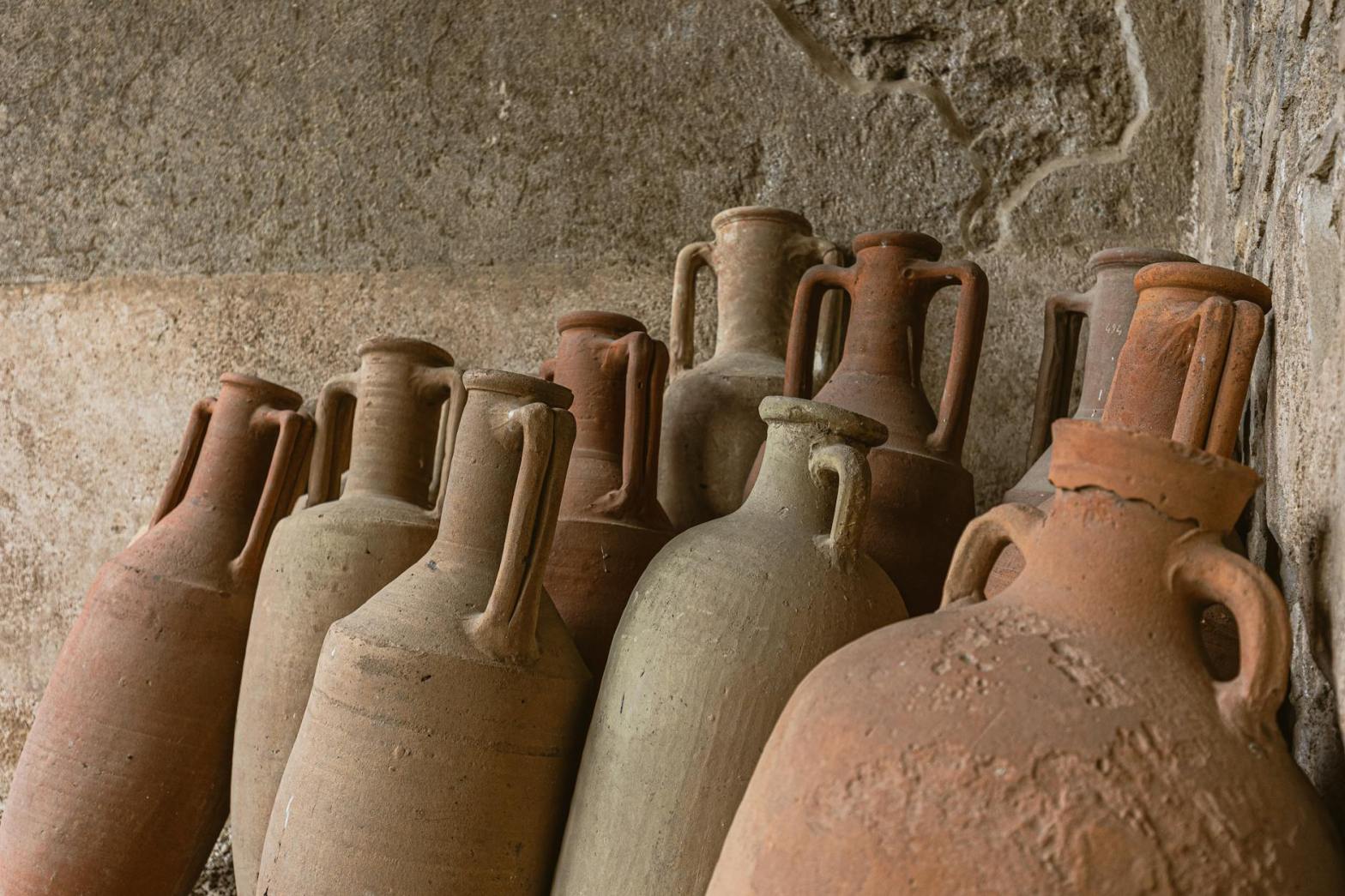
The water meant for ritual purity
became instead abundance offered free.
	Barbara Messner 17/01/2025
Baptism as Watershed
Baptism as Watershed
The Baptism of the Lord; Luke 3:15-22
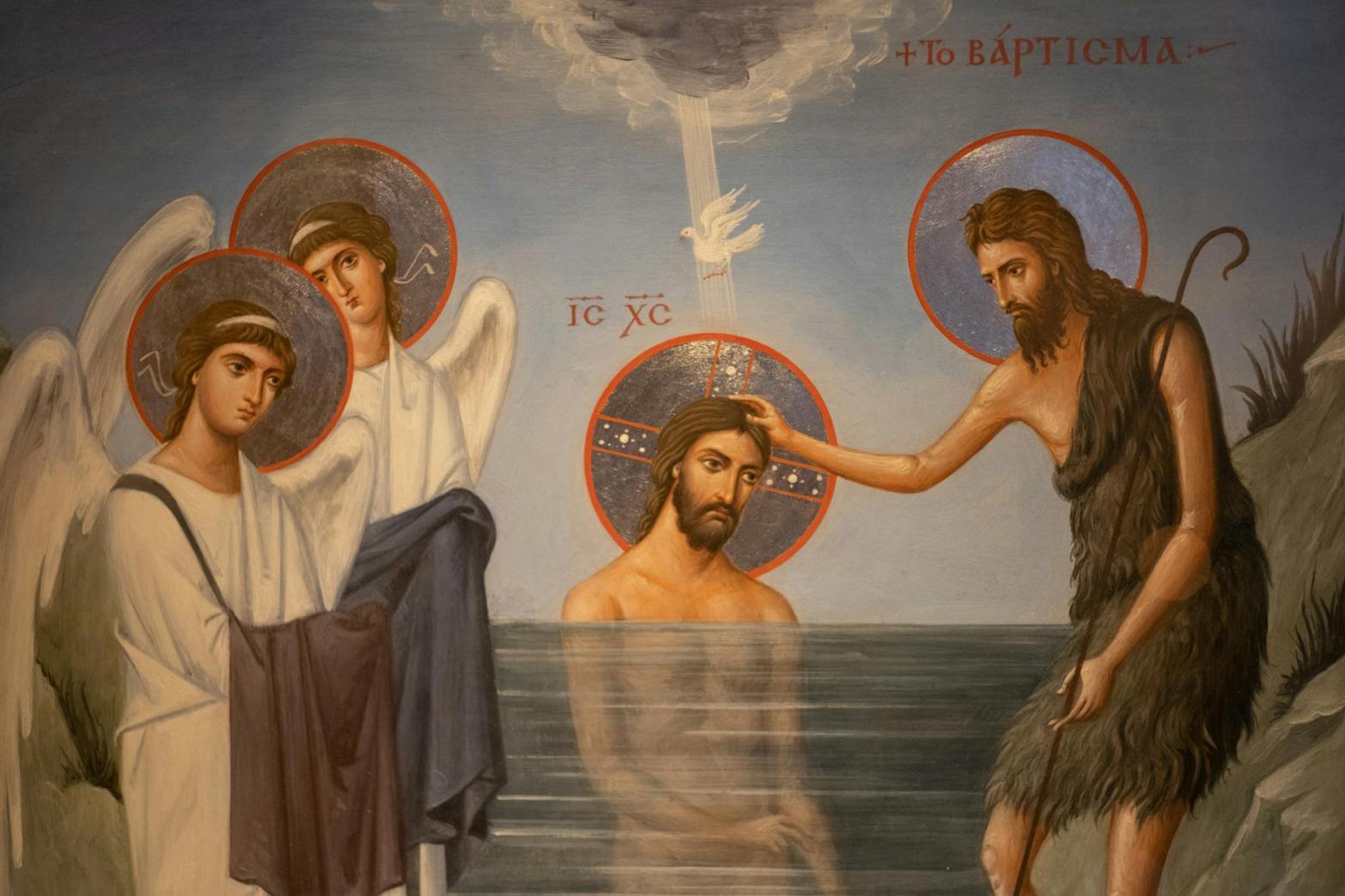
John and Jesus
in the waters:
they were connected
before they were born,
enfolded in separate
but related waters
in Elizabeth, Mary,
two prophet women,
pregnant and waiting,
singing their songs
of liberation.

At that meeting the child
in the womb leapt for joy.
Perhaps Mary pondered
prophetic knowing
in one not yet born.
And what of her foetus
foretold by an angel?

John and Jesus:
connected again
in Jordan’s waters:
that storied river
that runs down a crack
in the heart of the land.

John had prepared,
become the Baptizer,
annealed by wilderness,
ascetic living,
crying: “Repent!
Be transformed in the waters!”
But what of Jesus?
Is he the one
so long awaited?

Now he has come
after the hidden years
as carpenter, scholar.
He’s connected to John
and transforming waters:
baptism as watershed,
accepting vocation.

The Baptizer’s strength
guides him under,
holds him there
for a pregnant moment,
covered by water
in the crack of the heartland.
He leaps up joyful
into the God-light,
wet and gasping
as though he is new born.

His cousin steps back,
surrenders his place
to the one coming after.
The Spirit alights
and the Father affirms him:
“You are my Son,
the Beloved, and with you
I am well pleased.”

His purpose fulfilled,
what now for John,
imprisoned by Herod,
who will let his weakness
sanction a killing?
What now for Jesus,
ordained and commissioned,
wilderness waiting
to test his formation?

Soon he will grieve
after John’s execution;
Soon set his face
for the murderous city,
a cross on a hill
and an empty tomb.

The waters of death
will close over his head,
a pregnant waiting
in the womb of a tomb,
but he will burst forth
as though from the Jordan
into the God-light
that flows through creation
for he is beloved
and his Father well-pleased.
	Barbara Messner 10/01/2025
The Journey of the Wise
The Journey of the Wise
Epiphany – Matthew 2:1-12
There was a time when kings and queens were wise
and wisdom writings seen as Sacred Word;
then Wisdom Woman, God in female guise,
spoke at the crossroads and was widely heard.
Young Solomon had prayed for wisdom’s sight;
a wisdom school was fostered at his court,
and foreign leaders came to share the light –
the Queen of Sheba found more than she sought.

But in the time of Jesus, might was right,
and power was all that Rome and Herod saw.
The wisdom schools retreated out of sight,
and pious people idolized the law.
Astrology and divination seemed
akin to sorcery, estranged from God,
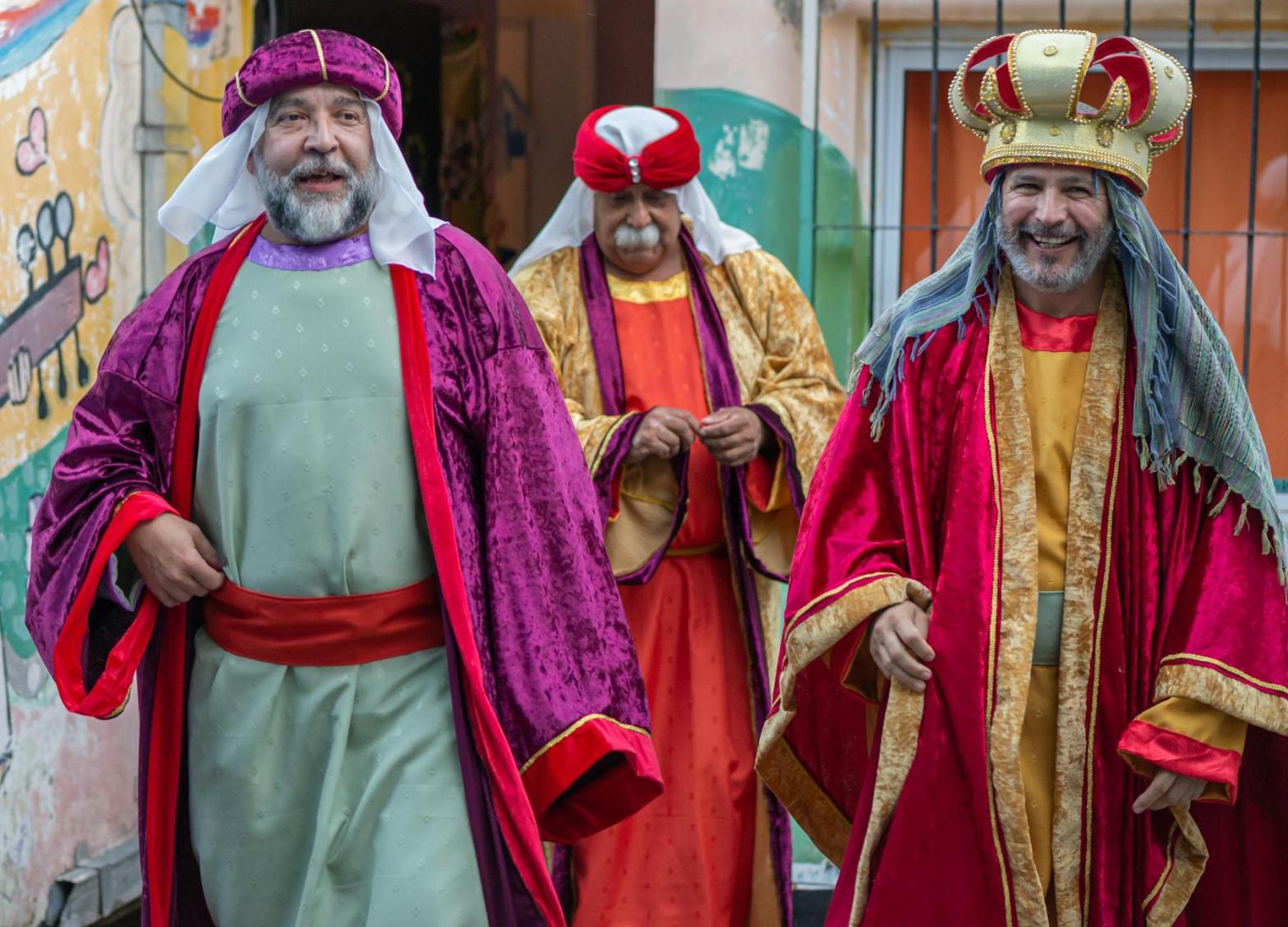
and magi, led by stars and portents, deemed
as suspect, foreign, more than merely odd.

They turned from star to palace on their way,
so kings they may have been; and they were heard
by Herod, who compared what they would say
to what chief priests and scribes found in the Word.
They carried gifts of Wisdom from afar,
while Herod plotted murderous attack;
they saw and worshipped underneath the star,
and led by dreams, made hidden journeys back.

Now in our time it seems that wisdom’s lost,
the cunning and self-serving rise to power;
intuitive discernment has been tossed
upon the scrap heaps where the wise grow sour.
Here smartness of technology is king,
and rubbish rises round our deafened ears,
and though at midnight angels swoop and sing,
we have not heard nor seen them now for years.

The Spirit fire still speaks to those grown bold,
who walk the ways of wisdom with a star,
and humbly kneel despite the straw and cold.
They know that God is with us where we are,
and though they yet must face a weary day,
at risk from the duplicity of power,
somehow their stories show a star-lit way,
and gifts of Wisdom needed in this hour.
	Barbara Messner 1 January 2021
Christmas Giving
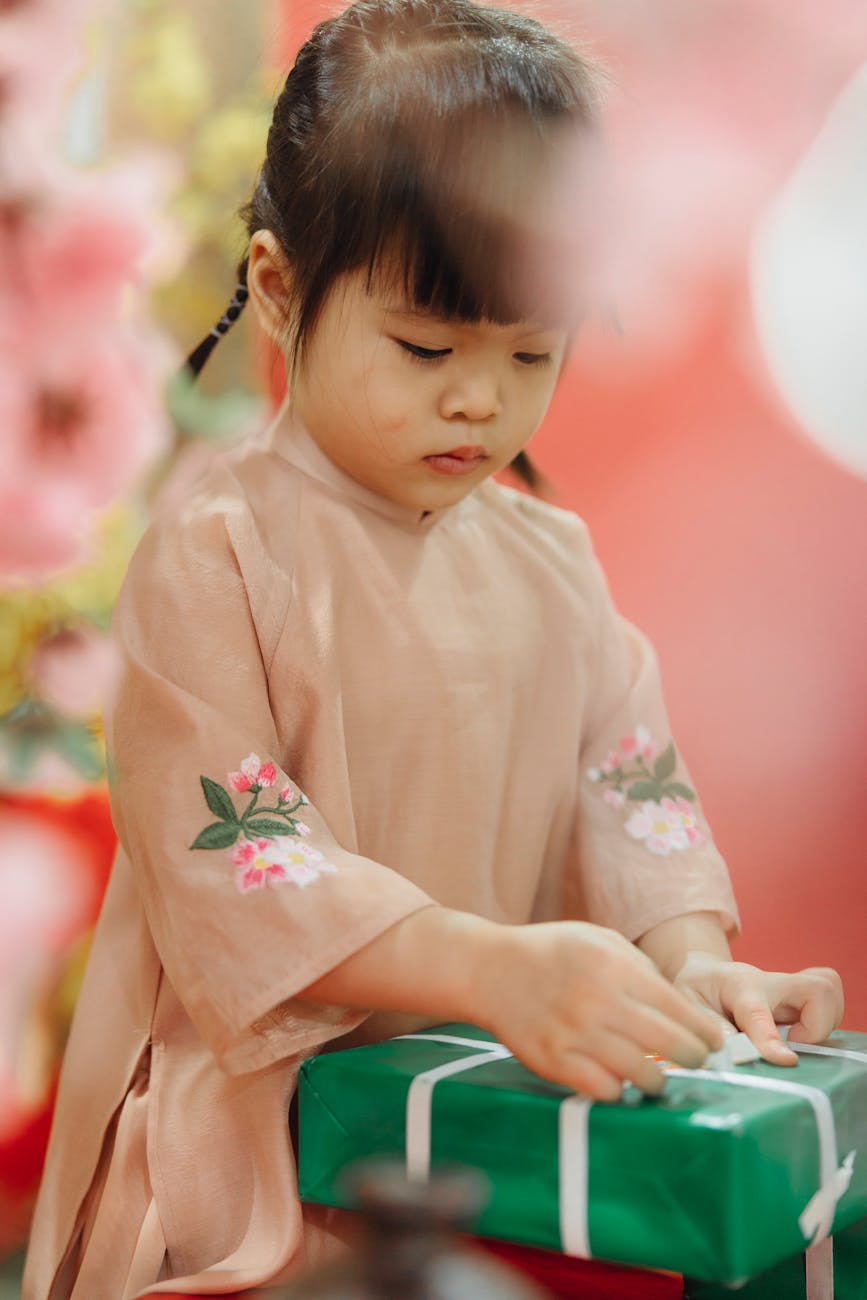
Christmas Giving
I have no grandchildren
to whom to give the gifts
expected at Christmas time.

If I did, I would not give
what the shops lure them to want –
not electronic games, but clay
animals my hands have shaped,
baked in the sun; not Barbies
but hand-made dolls, knitted perhaps
and stuffed with carded wool
still smelling of sheep.

Would the childrens’ disgruntled politeness
smile their thanks, but consign my gifts
to the forgotten bottom of the toy box,
or would my love and theirs
give a greater value to these
than to commercial plastic?

Perhaps they might cradle my gifts,
touched that Grandma made them,
perhaps imagine stories like those
I surely would have read to them?

Would the dolls be Mary and Joseph,
the animals posed around
under a shoe box stable,
and would some gathered grass
support a swaddled bundle
with a soft toy’s face,
in lieu of God’s storied gift,
hand-made with love?

Could a grandma’s clumsy crafting
and her bed-time story-telling
clear aside commercial trappings
to make space for sacred birthing?
	Barbara Messner 19/12/2024
With Joy You Will Draw Water

With Joy You Will Draw Water
Advent 3: Zephaniah 3:14-20, Isaiah 12:2-6
Joy bubbles up like some underground stream
channelled anew to this hidden dry pool.
Out of the depths it bursts into the light,
mating with air in bright bubbles and mist.

Maybe these waters remain for a time;
maybe they’re gone soon after they’ve come:
yet they awaken the ground all around;
greenness emerges and soon there are flowers.

So we’re encouraged to sing and rejoice,
let go of fears that have weakened our hands.
Prophecy claims God rejoices in us;
love soaks the driest of seeds into life.

Joy is the drawing of water from wells,
hidden in depths but raised up cool and clear.
Joy is refreshment in thanks and in trust –
healing distilled from the ages and earth.

Know that in flower and in flow God comes near;
shame will be changed and the outcast restored.
Gather like waters that flow into pools,
pray in thanksgiving and sing out in joy.
	Barbara Messner 8/12/2021
 Barb, poet priest